What does the DOT ask in the English test?
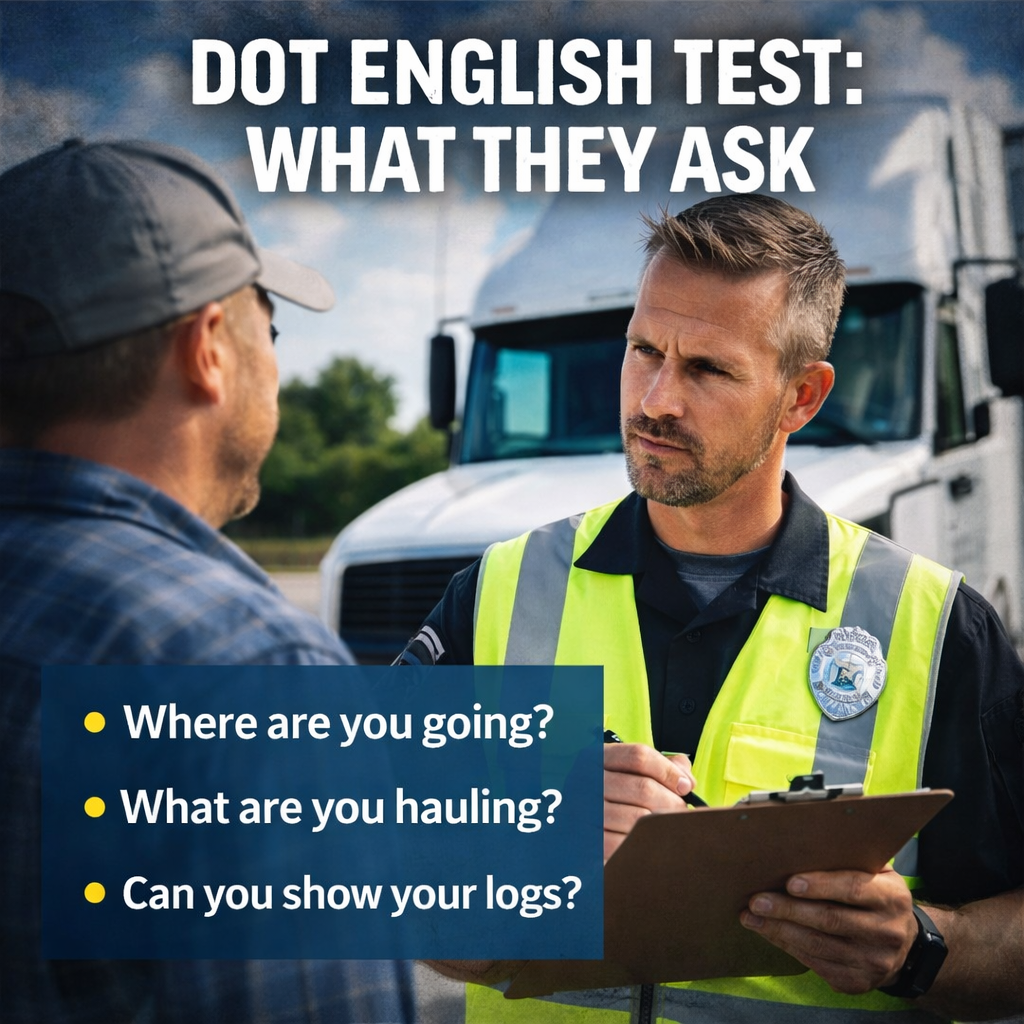
Q: What does the DOT ask in the English test?
A: Basic trip, logs, and paperwork questions. Here’s what to expect and how to answer to keep the stop calm.

FMCSA Compliance for Owner Operators
Content that helps owner-operators and small fleets prepare for DOT audits, understand what inspectors look for, and stay ahead on FMCSA compliance so they don’t get blindsided.
Q: What does the DOT ask in the English test?
A: Basic trip, logs, and paperwork questions. Here’s what to expect and how to answer to keep the stop calm.
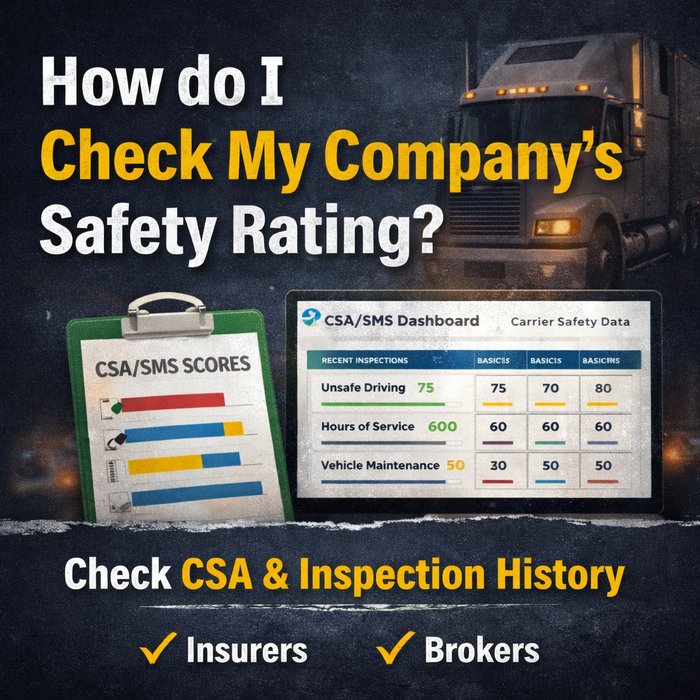
Q: How do I check my company’s safety rating?
A: Review your CSA/SMS profile, recent inspections, and percentile trends to see what brokers and insurers see.

Q: How do I get a ticket off my CSA record in 2026?
A: File a DataQs dispute with documented proof of error. Only factual mistakes or dismissed citations qualify.
Q: Can DOT put me out of service for English?
A: Yes. ELP can trigger OOS. Learn what the rule requires, how roadside checks work, and how to reduce the risk.
Q: Is a 5/5 split sleeper berth legal today?
A: No—49 CFR §395.1(g) still requires a 7-hour sleeper period unless you’re in an approved FMCSA pilot.
Q: Did Congress approve $200M for truck parking?
A: The House passed a FY2026 funding package that includes $200M to expand truck parking—final approval still required.
What is the broker transparency war?
The broker transparency war refers to disputes over carrier access to broker transaction records required under FMCSA regulation 49 CFR §371.3.
Can I go into sleeper berth while at a shipper or receiver?
Yes, but only if you are relieved from all work responsibility. Under 49 CFR §395.2, sleeper berth time is valid only when the driver is free from control and using the sleeper berth for rest. If you must remain available to move the truck or respond immediately, the time may still be considered on-duty.
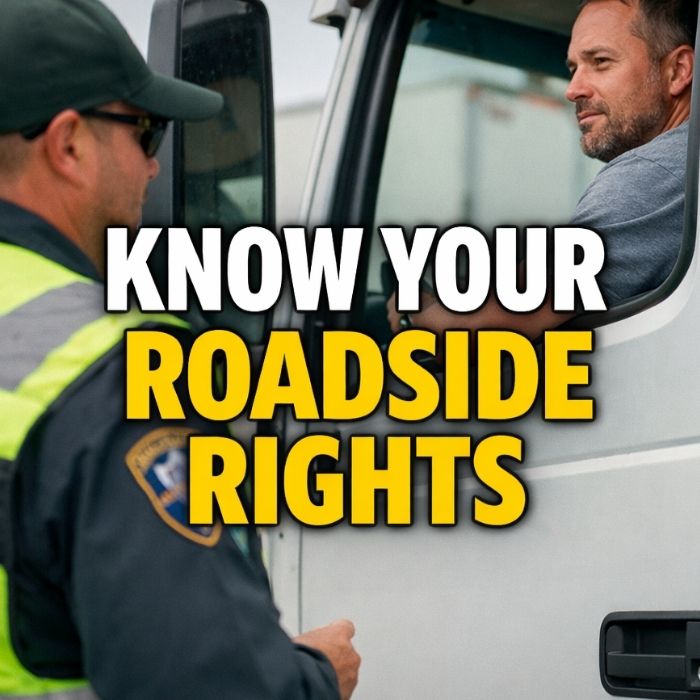
What are roadside rights during a DOT inspection?
Drivers must provide required records like ELD logs and documents, but inspections are limited to compliance—not personal devices.
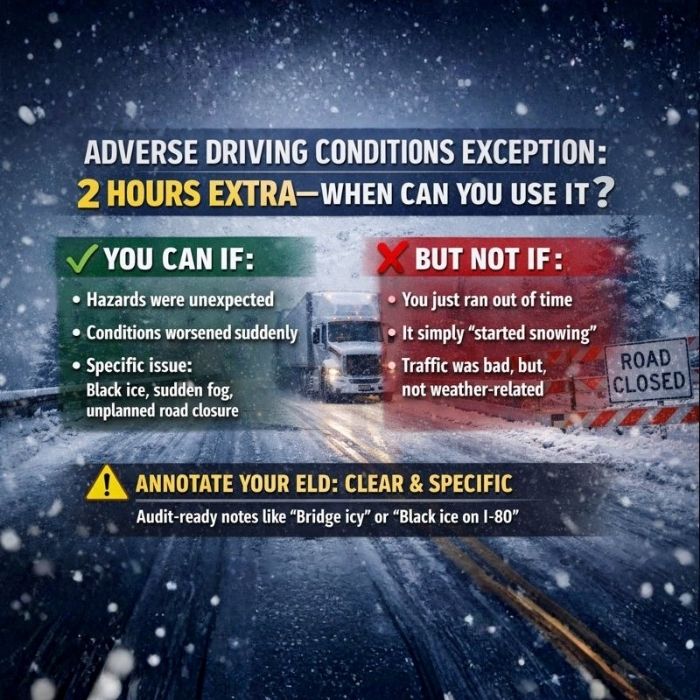
When unexpected weather hits, drivers may legally use the 2-hour adverse driving conditions exception. Here’s when it applies.