
Publish date: February 14, 2026
How to get a ticket off my CSA record in 2026
First truth: not every ticket can be removed.
Second truth: if the data is wrong and you don’t challenge it, the system treats it as fact.
CSA/SMS runs on inspection data. If a violation was entered incorrectly, tied to the wrong vehicle, wrong driver, wrong regulation, or later dismissed in court, there is a formal process to challenge it.
This guide explains how the dispute process works in 2026, what evidence actually matters, and how to avoid wasting time on emotional arguments that go nowhere.
🎙️ Behind the wheel? Click here and listen to the full DOT English Proficiency breakdown: Watch on YouTube
Before filing anything, confirm what’s showing on your profile: Check CSA/SMS + inspection history.
Step 1: Understand what system you’re dealing with
CSA/SMS is based on roadside inspection data. When an officer writes a violation, that information enters FMCSA’s system and is used in scoring for up to 24 months (time-weighted).
FMCSA reference: FMCSA SMS Methodology
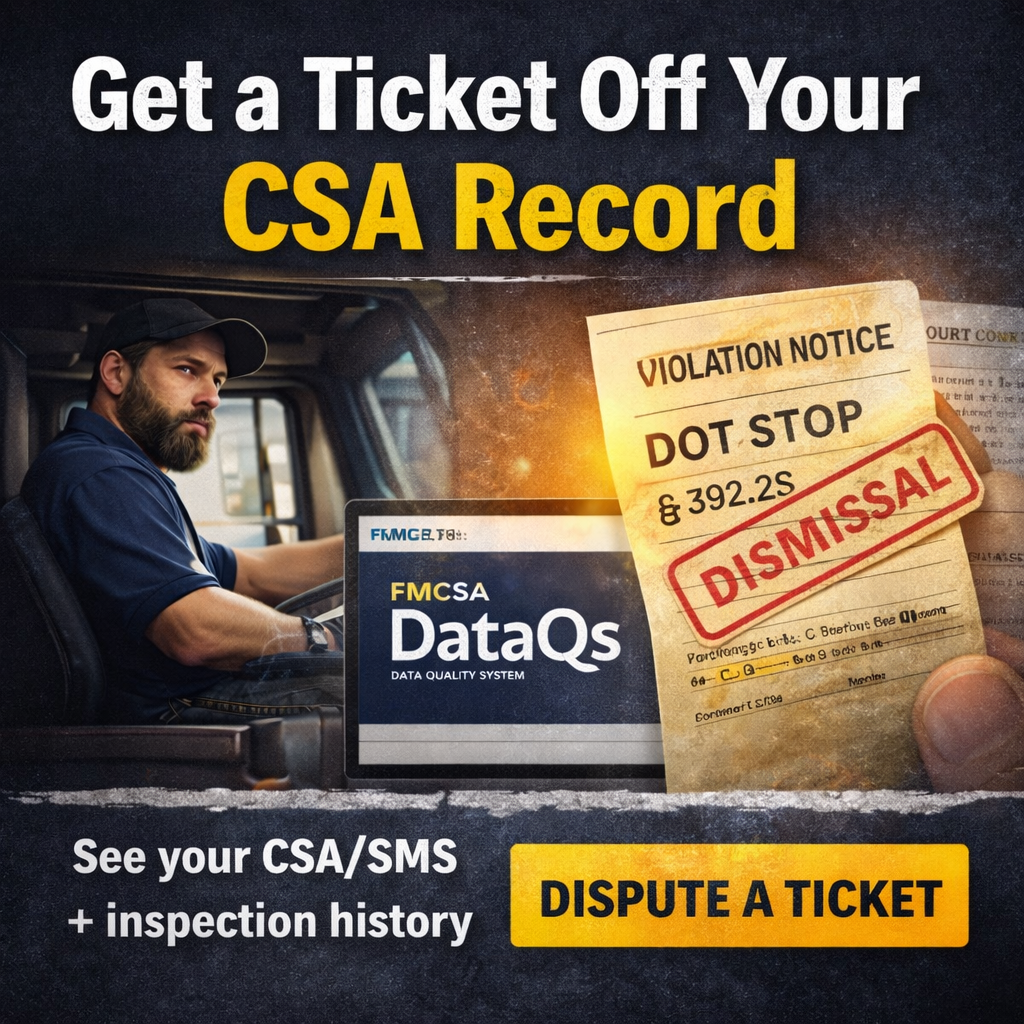
To challenge inspection data, FMCSA uses a formal dispute platform commonly known as DataQs.
Official portal: FMCSA DataQs System
Step 2: Know what actually qualifies for correction
Valid dispute reasons typically include:
- Violation entered under the wrong regulation
- Vehicle or driver misidentified
- Duplicate inspection entry
- Court dismissal or amended citation
- Clear factual error in documentation
What does NOT work:
- “The officer was rude.”
- “I disagree.”
- “This will hurt my insurance.”
DataQs is an evidence system—not an opinion system.
Step 3: Gather the right evidence (this is where most fail)
The stronger your documentation, the better your chances. That means:
- Inspection report copy
- Court disposition (if ticket dismissed or reduced)
- Maintenance records (for equipment-related violations)
- ELD logs (for HOS disputes)
- Photos or repair receipts
If you’re disputing an HOS violation, review: How long do HOS violations stay on my score?
Step 4: File through DataQs correctly
Inside DataQs, you’ll:
- Select the inspection number
- Select the violation
- Explain the factual basis for correction
- Upload supporting documentation
The request is then routed to the state that issued the violation for review.
Important: the state—not FMCSA headquarters—typically reviews and responds to the dispute.
What happens after you file?
Possible outcomes:
- Violation removed
- Violation amended
- Request denied
If denied, the violation remains and continues to influence SMS until it ages out under the 24-month window.
If removed, it no longer factors into SMS calculations going forward.
Driver vs Carrier: who should file?
- Carrier: typically files disputes affecting CSA/SMS.
- Driver: may need to coordinate with the carrier if the violation affects driver inspection history.
If the violation involves English proficiency or roadside communication issues, read: Can DOT put me out of service for English?
When disputing is worth it—and when it’s not
Dispute when:
- The violation is factually wrong.
- You have documentation to prove it.
Focus on prevention when:
- The violation is accurate.
- The system problem hasn’t been fixed.
Sometimes the smarter play is strengthening procedures so the next 12 months are clean.
Want the checklists and compliance systems that reduce violations before they happen? Unlock them here: Free DOT Compliance Checklist Bundle.
Next reads in this cluster
- How long do HOS violations stay on my score?
- Why did my insurance go up after one CSA point?
- How do I check my company’s safety rating?
Sources
Regulatory note: Dispute procedures and enforcement policies may change. Always verify current FMCSA guidance before submitting formal requests.