
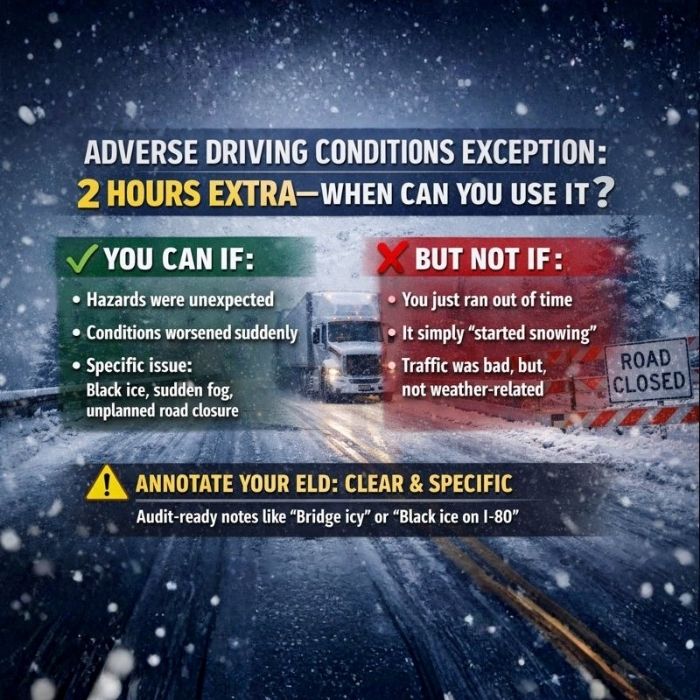
The Adverse Driving Conditions Exception: When You Can Legally Drive 2 More Hours
What is the Adverse Driving Conditions exception?
The Adverse Driving Conditions exception allows a driver to extend their maximum driving time by up to 2 additional hours when they encounter unforeseen adverse conditions that could not have been reasonably known at the time of dispatch.
This exception is authorized under 49 CFR § 395.1(b)(1).
What qualifies as “adverse driving conditions”?
According to the FMCSA, adverse driving conditions are weather or road hazards that were not known or reasonably foreseeable before the trip began.
Examples that may qualify:
- Sudden snow, sleet, or freezing rain
- Unexpected black ice
- Unplanned road closures or detours
- Sudden fog or visibility loss
If the condition was forecasted or known before dispatch, the exception generally does not apply.
When can you NOT use the 2-hour exception?
The Adverse Driving Conditions exception cannot be used just because you ran out of time.
Common situations that do NOT qualify:
- You planned poorly and hit your HOS limit
- Traffic congestion not related to weather
- It “started snowing” but was forecasted
- Delays at shippers or receivers
Inspectors routinely cite drivers who try to use the exception as a time-management fix.
How many extra hours are allowed?
The rule allows up to 2 additional hours of driving time beyond the normal maximum.
It does not eliminate other Hours-of-Service requirements and does not reset your clock. You must still comply with all other applicable HOS rules.
Do you have to annotate your ELD?
Yes.
FMCSA guidance requires drivers to annotate their logs when using the Adverse Driving Conditions exception. This requirement is outlined under 49 CFR § 395.28.
Weak annotations (often cited):
- “Snowing”
- “Bad weather”
- “Traffic”
Strong, audit-ready annotations:
- “Unexpected black ice on bridge near MM 142”
- “Unplanned interstate closure due to accident and ice”
- “Sudden fog reduced visibility to under 200 ft”
Clear, specific notes are what protect you later.
Why this exception matters in winter
Winter conditions change fast. Drivers who understand this rule can legally protect themselves when conditions deteriorate unexpectedly.
Drivers who misuse it often end up with:
- HOS violations
- Out-of-Service orders
- Follow-up audits
What to do before you use the exception
- Confirm the condition was truly unforeseen
- Use only the time needed to reach a safe stopping point
- Annotate your ELD clearly and specifically
- Do not treat this as a planning tool
Bottom line:
The Adverse Driving Conditions exception is a legal protection tool—not a loophole. Use it correctly, document it clearly, and it can keep you compliant when the weather turns.
Regulatory references:
49 CFR § 395.1(b)(1) – Adverse Driving Conditions Exception
49 CFR § 395.28 – ELD annotations and record requirements