Publish date: February 14, 2026
Do I have to read every road sign for DOT?
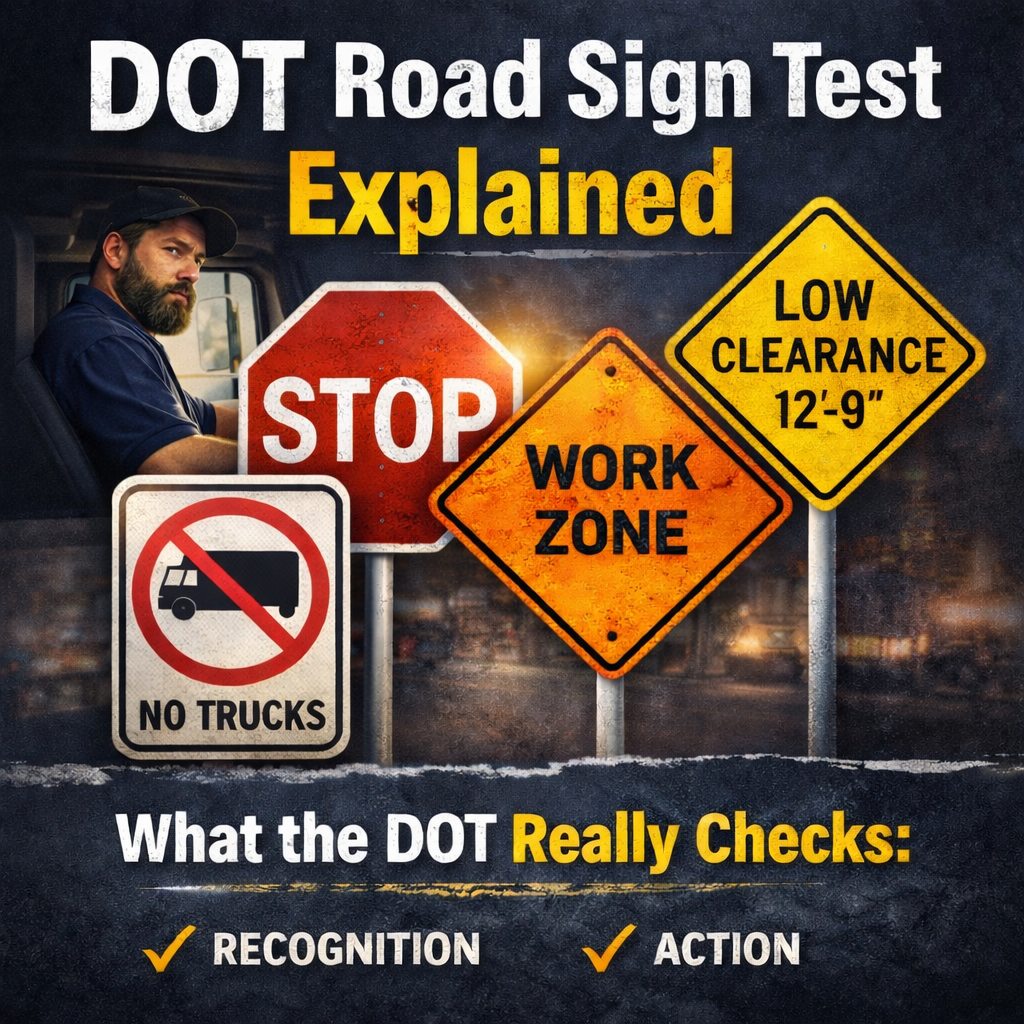
No—DOT isn’t expecting you to “read every sign” like a school test. What they’re checking is safety: can you recognize common traffic control signs, understand what they mean, and follow instructions during a roadside inspection.
If English proficiency becomes an enforcement issue at roadside, it usually shows up in two places:
- Basic interview communication (understanding questions and giving clear answers)
- Sign recognition / safety communication (knowing what key signs mean and what action you take)
This guide focuses on the sign side—because that’s what keeps you safe and keeps the stop from turning into a problem.
🎙️ Behind the wheel? Click here and listen to the full DOT English Proficiency breakdown: Watch on YouTube
Want the English Language Proficiency guide plus my full compliance library? Unlock it here: Free DOT Compliance Checklist Bundle.
What DOT is really checking with “sign recognition”
DOT isn’t trying to prove you know fancy vocabulary. They’re trying to confirm you can operate safely in real traffic conditions.
Plain English: if you can’t recognize key signs, you can’t reliably follow work zones, detours, lane control, weight station instructions, or emergency warnings—especially under pressure.
That’s why sign comprehension is tied to safety, not “perfect English.”
Where the English requirement comes from
The driver qualification rule requires a driver to be able to:
- Read and speak the English language sufficiently to communicate with the public, understand traffic signs and signals, respond to official inquiries, and make entries on reports/records.
Regulation reference: 49 CFR § 391.11(b)(2)
What “sign recognition” means in real life
In practice, “sign recognition” is about three things:
- Recognition: you can identify the sign type (warning, regulatory, guide, work zone)
- Meaning: you understand what the sign is telling drivers
- Action: you can explain what you do next (slow down, stop, merge, detour, etc.)
Trucking comparison: this is like spotting a low bridge sign early. You don’t need a paragraph—you need the right decision fast.
The signs that matter most for DOT roadside safety
If you want to be prepared without overthinking it, focus on the signs that are most connected to safety decisions and compliance behaviors:
1) Regulatory signs (rules you must follow)
- STOP
- YIELD
- SPEED LIMIT / REDUCED SPEED AHEAD
- DO NOT ENTER / WRONG WAY
- NO TURN ON RED (where applicable)
2) Work zone signs (where crashes happen fast)
- ROAD WORK AHEAD
- LANE CLOSED AHEAD / MERGE
- FLAGGER AHEAD
- DETOUR
- FINES DOUBLED (work zone)
3) Commercial / route guidance signs (truck-specific decisions)
- WEIGH STATION / OPEN / CLOSED
- TRUCK ROUTE
- NO TRUCKS
- LOW CLEARANCE
- GRADE / TRUCKS USE LOW GEAR
Standards reference: FHWA MUTCD (Manual on Uniform Traffic Control Devices)
What to do if you don’t understand a sign question at roadside
The worst move is guessing. Guessing makes it look like you understand when you don’t—and that’s exactly what DOT is trying to determine.
Better moves:
- “Please repeat slowly.”
- “I do not understand. Please say again.”
Why this works: it shows you’re trying to communicate clearly and safely instead of faking it.
How to prepare quickly without turning this into homework
Here’s the simplest prep plan that actually works:
- Pick 20 common signs from the lists above.
- Practice “meaning + action” in one sentence each.
- Practice under pressure: say the action out loud fast, like you’re in traffic.
Example format: “LANE CLOSED AHEAD = merge early and slow down.”
How this connects to the roadside English interview
Sign recognition is not separate from the interview—it supports it. If an inspector asks questions and you can answer clearly, show documents, and demonstrate safety awareness, the stop usually stays simple.
If you want the interview side of this explained step-by-step, read: What does the DOT ask in the English test?
If you want the full rule + enforcement consequences breakdown, read: Can DOT put me out of service for English?
Want the checklists and guides that keep you inspection-ready? Get access here: Free DOT Compliance Checklist Bundle.
Next reads in this cluster
- The English Rule: Can DOT put me out of service for English?
- Roadside Interviews: What does the DOT ask in the English test?
- CSA 2.0 & Insurance: Why did my insurance go up after one CSA point?
- DataQs: How to get a ticket off my CSA record in 2026
Sources
- 49 CFR § 391.11(b)(2) (English language requirement)
- FHWA MUTCD (traffic control sign standards)
- FMCSA English Language Proficiency Enforcement Guidance (May 20, 2025) (PDF)
Regulatory note: Regulations, enforcement guidance, and inspection procedures can change. Always verify current requirements using FMCSA/CVSA sources before making compliance decisions.