AI Camera Engagement: Driver-Facing Cameras — Safety Tool or “AI Spy”?

Are AI driver-facing cameras legal in trucking?
Yes—but the real issues are privacy, audio consent, camera placement, and how footage is used after inspections or crashes.

FMCSA Compliance for Owner Operators
Are AI driver-facing cameras legal in trucking?
Yes—but the real issues are privacy, audio consent, camera placement, and how footage is used after inspections or crashes.

Does a clean dashboard really help during a DOT inspection? Yes—while it doesn’t change the rules, an organized cab can reduce delays, lower stress, and help inspections move faster by keeping required documents easy to access.
What is a Clearinghouse downgrade?
A Clearinghouse downgrade happens when a driver is listed as “prohibited” in the FMCSA Drug & Alcohol Clearinghouse and may lose CDL or CLP privileges until the Return-to-Duty process is completed.

Q: Are there alternatives to factoring in trucking?
A: Yes. Truckers can improve cash flow through selective factoring, better broker selection, and building reserves.

Q: What are the biggest factoring contract traps for truckers?
A: Automatic renewals, exit fees, and minimum usage terms can lock carriers into agreements longer than expected.
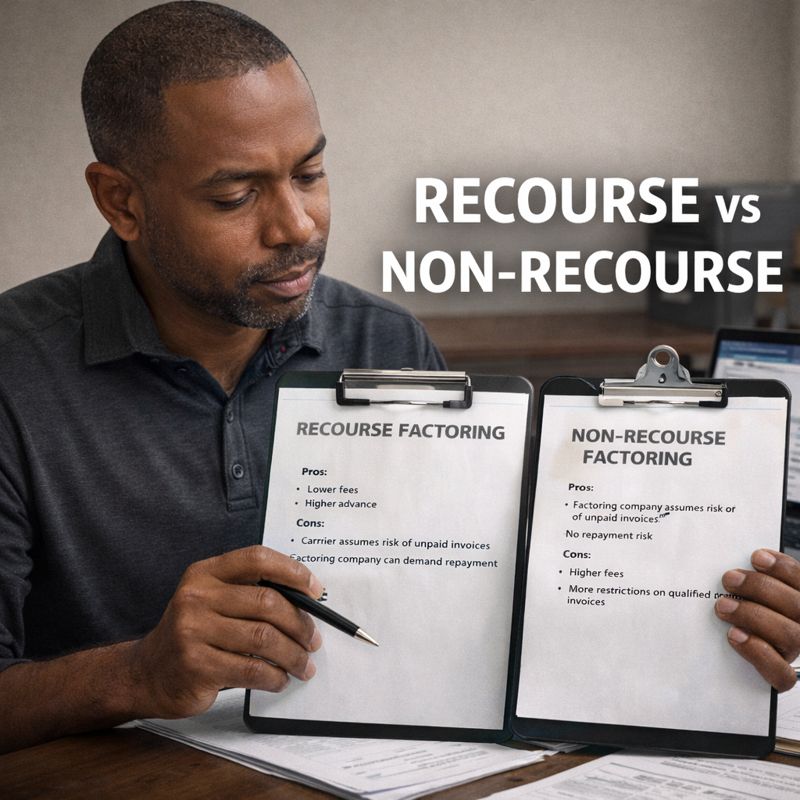
Q: What is the difference between recourse and non-recourse factoring?
A: Recourse means the carrier may repay unpaid invoices, while non-recourse shifts certain broker risk to the factor.

Q: What is the real cost of factoring in trucking?
A: The real cost depends on fees, how often you factor, and whether your loads can support fast pay without killing profit.

Q: What is factoring in trucking, and when should an owner-operator use it?
A: Factoring lets truckers get paid faster by selling invoices, but it only makes sense in specific cash-flow situations.

What is the adverse driving conditions trap?
The adverse driving conditions trap happens when drivers use the 2-hour exception for forecasted weather, delays, or poor trip planning—leading to HOS violations during roadside inspections or audits.
Can I go into sleeper berth while at a shipper or receiver?
Yes, but only if you are relieved from all work responsibility. Under 49 CFR §395.2, sleeper berth time is valid only when the driver is free from control and using the sleeper berth for rest. If you must remain available to move the truck or respond immediately, the time may still be considered on-duty.