
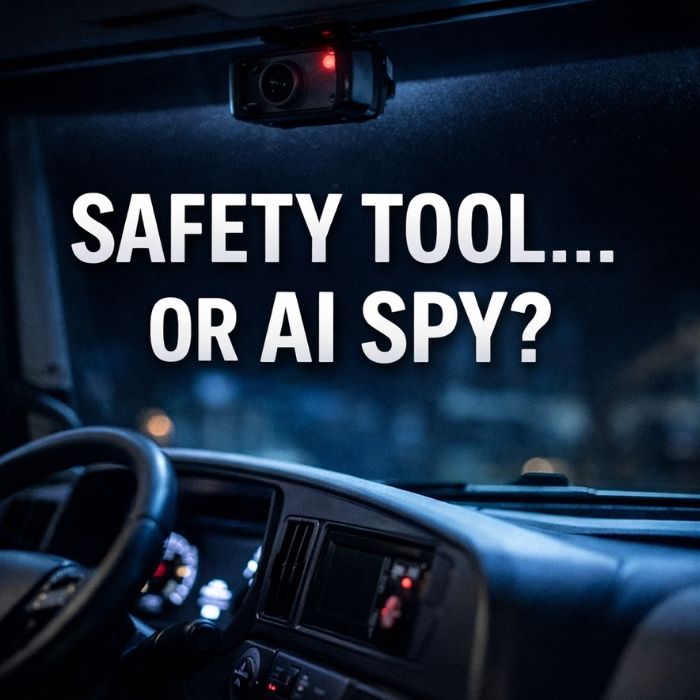
AI Camera Engagement: Driver-Facing Cameras — Safety Tool or “AI Spy”?
Answer (fast): Driver-facing cameras are generally allowed in commercial fleets, but the real friction points are policy clarity, audio recording consent rules, proper mounting (visibility/obstruction), and how footage is used. If you’re a driver, the smartest move is to get the camera policy in writing and understand what triggers recording, who can access footage, and how long it’s kept.
Are driver-facing cameras legal in trucking?
In most situations, yes—companies can install driver-facing cameras in company equipment. The bigger risk usually isn’t the camera itself; it’s how it’s installed (windshield obstruction rules) and whether the system records audio, which can trigger consent requirements depending on the state.
Important: Federal wiretap law sets a baseline of one-party consent, but states can require stricter consent standards—especially for audio. That’s why fleets typically publish written policies and disclosures if audio is enabled.
Does FMCSA require driver-facing cameras?
No. FMCSA does not require carriers to use driver-facing cameras. Where FMCSA does come into play is safe installation and whether something mounted on the windshield area obstructs a driver’s view.
What does FMCSA say about mounting cameras on the windshield?
FMCSA’s primary issue is obstruction. The FMCSRs restrict devices mounted on the interior of the windshield if they block a driver’s sight lines. The rules include limits for how far below the top of the windshield certain devices can be placed and still be considered within an “authorized” area.
Practical takeaway: A camera can be “fine” as a technology choice but still become a compliance and safety issue if it’s mounted where it blocks your view.
Can camera footage be used against a driver after a crash?
Yes. Video footage can become evidence in crash investigations, insurance claims, and lawsuits. That cuts both ways:
- Protects drivers when a four-wheeler lies or when fault is wrongly assigned.
- Hurts drivers if it shows distraction, unsafe behavior, or violations of company policy.
From a safety and investigation standpoint, the NTSB has documented how onboard video systems can capture critical crash-related information and support safety recommendations.
What should drivers ask before accepting a truck with a driver-facing camera?
Don’t debate feelings—ask for policy facts. This list reduces stress and prevents surprises later:
- Recording mode: always recording or event-triggered only (hard brake, collision, lane departure, etc.)?
- Audio: is audio enabled? If yes, what disclosures/consent process is used?
- Access: who can view footage (safety department, dispatch, third-party vendor, insurer)?
- Retention: how long is footage stored?
- Discipline: is footage used for coaching, termination, or both?
- Off-duty privacy: what happens when you’re off duty or in the sleeper berth?
Bottom line: A camera without a clear written policy feels like surveillance. A camera with clear limits and consistent rules feels like protection.
What should small carriers put in writing to reduce pushback?
If you’re the carrier, the fastest way to reduce turnover is to make your rules plain and consistent. A solid camera policy usually spells out:
- Purpose: safety, training, and claims protection (not harassment).
- Trigger events: what causes recording and review.
- Privacy boundaries: how off-duty time is handled (if the system supports it).
- Access control: who can view footage and under what conditions.
- Retention schedule: how long it’s kept and why.
This is the same principle as compliance paperwork: if you don’t define it, you’ll fight about it later.
Quick recap
- Driver-facing cameras are generally allowed, but policy + installation + audio consent are the real friction points.
- FMCSA is heavily focused on windshield obstruction and safe placement.
- Footage can protect or hurt a driver depending on what it shows.
- The fastest way to reduce stress is getting the camera rules in writing.
Disclaimer: This article is informational and not legal advice. For legal questions about recording/consent in your state, consult a qualified attorney.
Related articles
Sources
- eCFR — 49 CFR § 393.60 (obstructions to driver’s field of view)
- Federal Register — FMCSA windshield area rule for vehicle safety technology (2022)
- eCFR — 49 CFR Part 393 (Parts and Accessories Necessary for Safe Operation)
- NTSB Safety Report — Commercial Vehicle Onboard Video Systems (SR-15-01)
- Reporters Committee — Recording Guide (federal baseline + states can be stricter)