
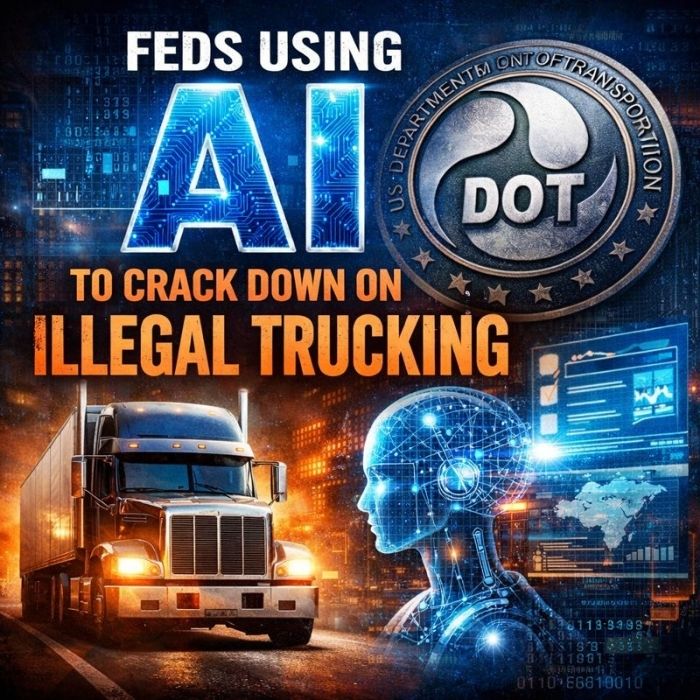
DOT Is Using AI to Target Illegal Trucking — What That Means for Owner-Operators and Small Fleets
Enforcement is shifting from random inspections to data-driven targeting. If your compliance isn’t tight, you don’t want to be the easy flag.
What did the DOT actually announce?
The U.S. Department of Transportation has publicly stated it is expanding the use of artificial intelligence and advanced data analytics to improve enforcement across the trucking industry.
In plain terms, regulators want to use technology to identify illegal trucking activity faster — including improper CDL use, questionable hiring practices, and carriers operating outside federal requirements.
What does “AI enforcement” really mean?
This does not mean robots doing roadside inspections.
It means DOT and FMCSA can analyze large amounts of data at once — licensing records, carrier histories, employment patterns, and compliance indicators — to decide who gets audited, investigated, or shut down first.
Think of it like this: instead of enforcement being random, compliance risk is now being scored behind the scenes. Carriers that stand out on paper are more likely to get attention.
What are regulators focused on right now?
One of the main areas under review is CDL integrity — especially non-domiciled CDLs and how states and carriers issue, verify, and rely on them.
The federal government has already shown it is willing to:
- Pressure states to clean up CDL issuance programs
- Withhold or threaten federal transportation funding
- Push enforcement actions tied to licensing and driver qualification failures
AI is simply the next tool being added to make that enforcement faster and more precise.
Is this only about “illegal foreign drivers”?
No — and this is where many carriers misunderstand the risk.
While non-domiciled CDL misuse is part of the conversation, the bigger issue is documentation and verification. AI systems don’t care about intent — they flag inconsistencies, gaps, and patterns that don’t line up.
That means sloppy records can put a legitimate carrier on the radar just as fast as intentional fraud.
What this means for owner-operators and small fleets
If you run clean and stay compliant, this shift is meant to level the playing field. But tighter enforcement also means less tolerance for “close enough” paperwork.
Common problem areas include:
- Incomplete or outdated Driver Qualification Files (DQFs)
- Missing proof of CDL status, medical certification, or endorsements
- Weak hiring or contractor verification processes
- Inability to quickly produce required records during an audit
What you should do right now
Treat this the same way you treat equipment maintenance — you don’t wait for a breakdown to inspect.
-
Audit every Driver Qualification File.
Make sure each file meets FMCSA requirements under 49 CFR Part 391 and is current. -
Verify CDL and medical status for every driver.
Don’t assume anything — verify and keep proof in the file. -
Clean up your compliance systems.
If an auditor asked for records tomorrow, you should be able to produce them without scrambling.
Why this matters
Regulators are modernizing enforcement. That means compliance isn’t just about passing roadside inspections anymore — it’s about what your data says when nobody is looking.
If your operation is organized, documented, and audit-ready, this shift works in your favor. If not, AI makes it easier for problems to surface.
Read what other truckers are checking
Before you haul, make sure the other side is legit: Verify broker authority before you book the load .