
Winter Survival for Truckers: What Fails First When the Cold Hits
Do I really need to prepare if I’m running the South or heading to Florida?
Yes.
Cold doesn’t respect state lines. Freezing temps and black ice can hit farther south than drivers expect, especially on bridge decks, shaded ramps, and early-morning runs. Winter breakdowns aren’t only about snowstorms—they’re about cold stress on systems.
What fails first when temperatures drop?
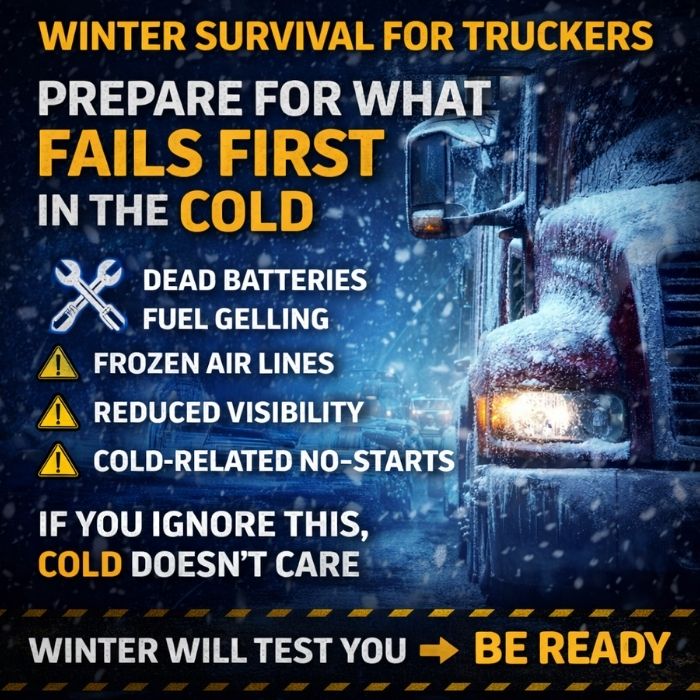
Most winter shutdowns come from the same few issues—often between 15°F–32°F, usually overnight:
- Dead batteries
- Fuel gelling
- Frozen air lines
- Reduced visibility
- Cold-related no-starts after resets
Winter prep isn’t panic buying. It’s risk control.
The #1 winter failure: dead batteries
Cold batteries don’t crank the same way warm ones do. Add long resets, lights/inverters pulling power, and cold-soaked engines, and you’ve got a no-start situation.
⭐ Star Item: Heavy-Duty Jumper Cables (20–30 ft)
Standard car jumper cables won’t reach between tractors and don’t move enough current to start a rig.
Why you need them:
- Long enough to reach safely between tractors
- Thick enough to move real amps
- Helps avoid hours of waiting for roadside service
👉 Heavy-Duty Jumper Cables
https://amzn.to/4sndhE4
Dead batteries are the most common winter shutdown. This is one of the easiest problems to prevent.
Stay warm during resets (without burning fuel)
Cold resets wear drivers down. Running the engine nonstop burns fuel and adds wear. The smarter move is targeted heat.
Warmth Bundle: Heated Gloves + Heated Vest
Heated Gloves (12V Rechargeable)
Perfect for pre-trips, fueling, chaining, and roadside issues.
Heated Vest (Lightweight)
Keeps your core warm without bulk—useful in the cab/sleeper or when you have to step outside.
👉 Note: If your heated vest link is out of stock, swap this section with an in-stock core-warming option from your list.
These aren’t “comfort” items. Cold hands and a cold core lead to fatigue—and fatigue leads to mistakes.
Pre-trip essentials that prevent winter emergencies
Some winter problems don’t announce themselves. They show up when you try to move.
Emergency Duo: Snow Brush + Diesel Anti-Gel
Snow / Ice Brush Combo
Most scrapers are made for cars, not Class 8 windshields. Clear visibility fast and get rolling.
Diesel Anti-Gel
Fuel gelling can happen farther south than drivers expect—especially when temperatures drop overnight.
A $20 bottle in the side box is cheaper than a tow, a no-start service call, or a missed delivery window.
How to use the Adverse Driving Conditions exception correctly
If weather conditions were not known when you started your shift, you may be able to use the 2-hour Adverse Driving Conditions exception.
Important reminders:
- This is not automatic—use it only when it applies
- Annotate your ELD clearly
- “Snowing” is not enough—be specific
Examples of strong notes: unexpected bridge icing, sudden temperature drop causing black ice, unplanned road closures, or detours due to weather.
Why winter prep matters more this year
Between higher repair costs, tighter margins, and less tolerance for downtime, winter mistakes cost more than they used to. Smart operators aren’t buying everything—they’re buying the right things and keeping them in the truck before they’re needed.
Winter survival checklist (quick)
- ✅ Heavy-duty jumper cables
- ✅ Diesel anti-gel in the side box
- ✅ Proper snow/ice clearing tools
- ✅ Cold-weather gear for hands and core
- ✅ Clear ELD annotations when weather turns
Prepared trucks stay moving. Unprepared trucks wait.
Final word
Winter doesn’t have to shut you down—but it will test what you ignored. This guide isn’t about gear. It’s about staying operational when others aren’t.