
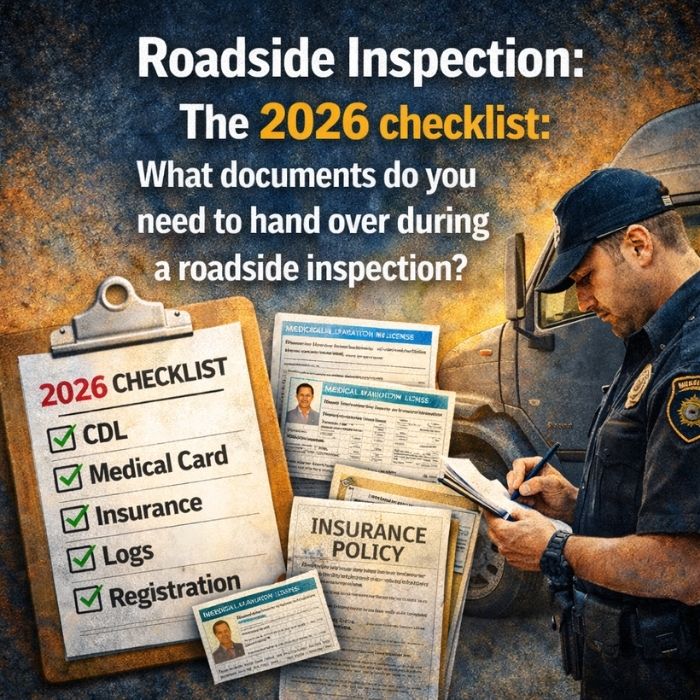
What Documents Do You Need for a Roadside Inspection?
Roadside inspections move fast. Here’s what officers typically ask for first — and how to have it ready without digging through a pile of paperwork.
When a roadside inspection starts, one of the first things an officer does is collect and review the driver’s documents. This initial paperwork check sets the tone for the entire stop. The more organized and prepared you are, the smoother everything else goes.
What documents do you need for a roadside inspection?
At a minimum, be ready to produce the documents inspectors commonly request during a North American Standard roadside inspection:
- Driver’s license: Your CDL or valid driver’s license is checked during the driver portion of the inspection.
- Medical certification proof: Officers verify medical qualification and may ask for documentation related to medical variances or SPE certificates.
- Hours-of-Service record: You must be able to display or transfer your RODS/ELD record when requested.
- Shipping papers / Bill of Lading: Officers commonly ask for your shipping papers. These are mandatory for hazmat and frequently reviewed for non-hazmat freight as well.
- Supporting documents in your possession: If requested, you must provide supporting documents you have with you, such as bills of lading, fuel receipts, and trip paperwork.
- DVIR / inspection paperwork (if applicable): Where required, inspectors may review DVIRs and periodic inspection documentation.
So basically, if you’re hauling freight, your shipping papers — often your bill of lading — are part of what inspectors expect to see, and they can also be used to support your hours-of-service record.
Do you have to show supporting documents during a roadside inspection?
Yes. During a roadside inspection, a driver must provide any supporting documents in their possession when requested by an authorized safety official. These documents can be shown in the format you have them — paper or electronic.
Do you have to carry a medical card?
Drivers must be medically qualified to operate a commercial motor vehicle. While medical certification information is often recorded electronically, inspectors may still verify medical qualification during a roadside inspection. If you have a medical variance or SPE, keeping that documentation accessible is a smart move.
What’s the fastest way to avoid delays during document checks?
All right, here’s what works in the real world:
- Keep driver documents together (license, medical proof, variance paperwork).
- Know your ELD roadside inspection steps before you ever get stopped.
- Organize shipping papers and supporting documents so you can produce what you actually have in your possession.
- Keep inspection paperwork accessible if it’s required for your operation.
FMCSA compliance tools
Let me show you… If you want practical tools and checklists that keep you ready for inspections, audits, and real-world compliance, start here:
Read what other truckers are reading
- What is a DOT audit and why do truckers fail them?
- How long do you have to keep driver records?
- What happens if you fail a DOT drug test?
Disclaimer: This article is informational and not legal advice. For official requirements, always confirm directly with FMCSA/DOT sources.