
How to Check a Broker’s Credit Score and Days to Pay on DAT (Before You Book)
You can book the “best paying” load on the board and still lose the week if the broker pays slow—or doesn’t pay without a fight.
This is why smart owner-operators don’t just check rate. They check who’s behind the rate.
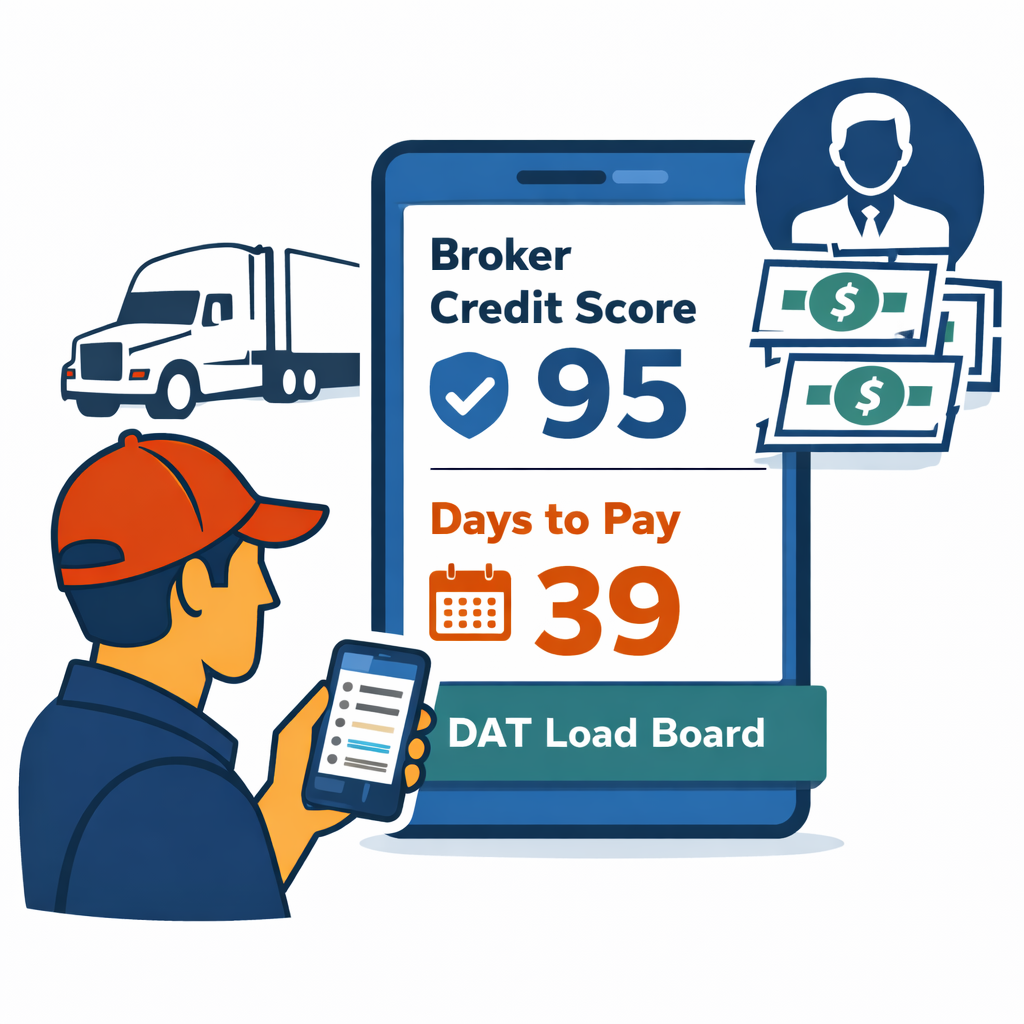
Here’s how to use DAT to do a quick broker vetting pass with two simple signals: credit score and Days to Pay.
Disclosure: This page contains affiliate links. If you sign up through them, I may earn a commission at no extra cost to you.
Always review pricing and eligibility at checkout. Offers can change.

Quick answer: what “credit score” and “Days to Pay” actually tell you
Broker credit score is a risk signal: how reliable that broker is at paying carriers based on credit/payment data.
Days to Pay is a cash-flow signal: how long it typically takes that broker to pay after paperwork is received.
Neither number is magic. But together, they help you avoid the two classic traps:
- Great rate, slow pay
- Fast pay promises, bad broker reality
Where to find the broker credit score on DAT
When you open a load listing in DAT, look for the broker/company details section. That’s where you’ll typically see broker identity info and any available vetting signals.
If the info isn’t visible on your current plan, that’s your hint: you may be using a plan that’s built for access—not risk control.
If you’re still choosing a plan, start here:
DAT Standard vs Enhanced vs Pro: which plan do you actually need?
Where to find “Days to Pay” on DAT
Days to Pay is usually shown alongside broker/payment data (when available). Treat it like a reality check.
A broker can “pay” and still hurt your business if they pay in 35–45 days and your weekly costs hit every 7 days.
How to use these numbers like a pro (simple rules)
Rule #1: Don’t let a strong rate blind you
A high rate is not the same thing as a profitable load. If payment takes too long, the load can cost you in:
- fuel float
- repair timing
- insurance drafts
- dispatch/overhead pressure
Rule #2: Slow pay + new authority is a dangerous combo
If your authority is under 90 days, you have less margin for surprises. Cash flow is tighter, and one delayed payment can push you into bad decisions.
New authority guide:
Authority under 90 days on DAT: will brokers work with you?
Rule #3: If something feels off, trust the signal and move on
You don’t need to “prove” the broker is bad. You just need to decide if the load fits your risk tolerance.
There are enough loads and enough brokers that you don’t have to gamble to stay moving.
Posted rate vs. real pay (why vetting matters even more)
Sometimes the posted rate is just bait—or it’s missing important details that change the math.
Read this before you assume the rate is real:
Are DAT load board rates real—or just a starting point for negotiation?

The simple broker vetting checklist (before you book)
- Credit score looks solid? Good. Keep going.
- Days to Pay fits your cash flow? If not, the “good rate” may not be worth it.
- Communication clean? If it’s messy before pickup, it won’t get better after delivery.
- Paperwork clear? Confusion here turns into slow pay later.
Your goal isn’t perfection. Your goal is to avoid obvious problems before they cost you time and money.
Cash flow: the hidden reason drivers take bad brokers
Most bad broker decisions don’t come from ignorance. They come from pressure.
When you’re waiting weeks to get paid, you start taking loads you shouldn’t. You start saying yes to brokers you don’t trust. That’s how a decent business turns chaotic.
Need faster cash flow too? Here’s DAT Factoring (Outgo):

Factoring is a cash-flow tool. Always review rates, terms, and eligibility before signing.
FAQ
What does “Days to Pay” mean?
Days to Pay is how long a broker typically takes to pay after receiving paperwork. It’s not about whether they pay—it’s about how long your money is tied up.
What’s a “good” Days to Pay number?
“Good” depends on your cash flow. If you can’t comfortably float fuel and weekly expenses, long payment timelines can force bad decisions.
Is broker credit score enough to trust a broker?
No single number replaces judgment. Use it as a risk signal, then pay attention to communication, paperwork clarity, and whether the deal feels clean.
What if I can’t see credit score or Days to Pay on my plan?
That usually means you’re on a plan focused on access, not vetting. If broker risk is a priority, compare the plan levels and choose the one that matches your situation.
Plan guide:
DAT Standard vs Enhanced vs Pro
What to do next
Before you book your next load, take 20 seconds and vet the broker. That one habit protects your week more than any “hot load” ever will.
If you’re using lane signals to decide where to run next:
How accurate is the DAT Market Conditions Index (heat map)?
If you want protection when a broker doesn’t pay:
What is DAT Assurance, and will it help if a broker doesn’t pay?