
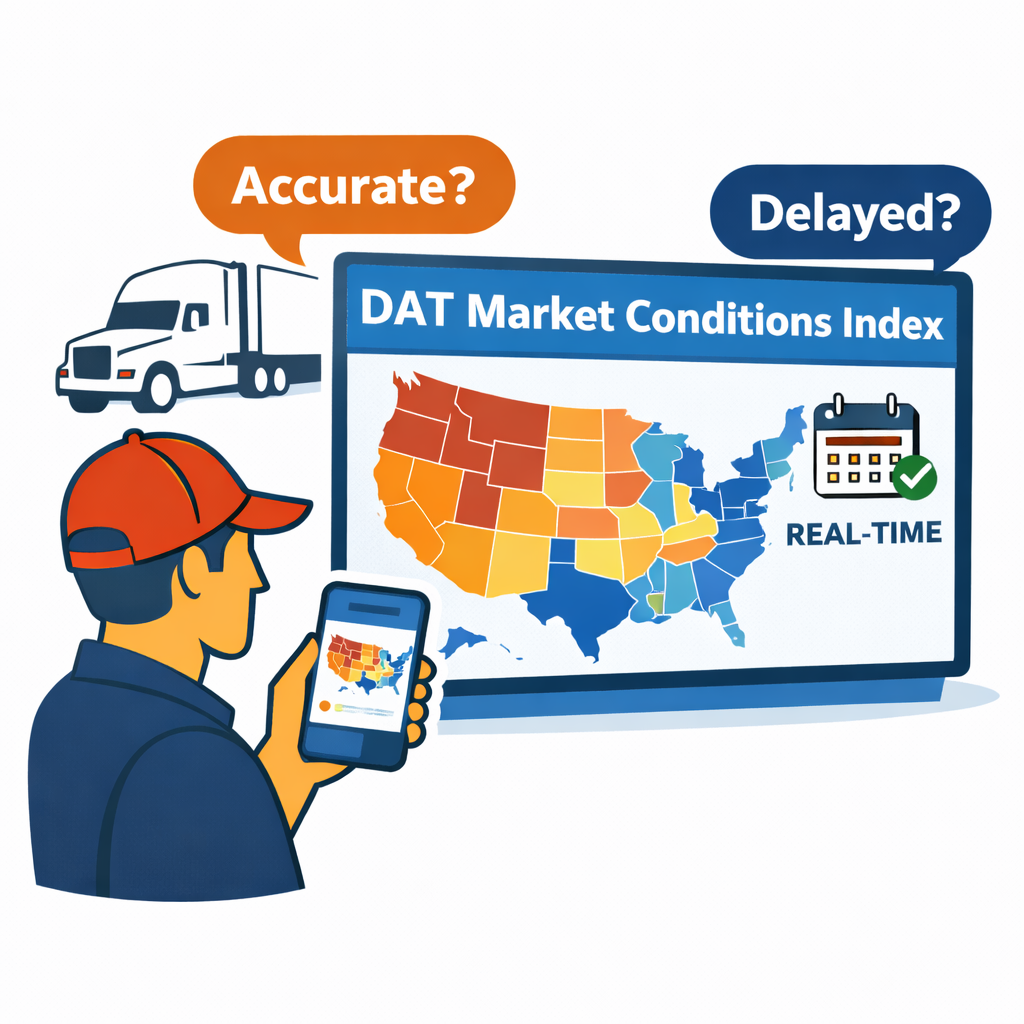
How Accurate Is the DAT Market Conditions Index (Heat Map), Really?
The heat map is a tool. Not a crystal ball.
Used correctly, the DAT Market Conditions Index can help you spot tight markets, avoid dead lanes, and choose better timing. Used wrong, it can make you chase “red zones” that look hot but don’t pay once you factor in deadhead, appointment constraints, and broker behavior.
This guide breaks down what the heat map is good for, what it can’t tell you, and how to use it like a decision tool instead of a gambling signal.
Disclosure: This page contains affiliate links. If you sign up through them, I may earn a commission at no extra cost to you.
Always review pricing and eligibility at checkout. Offers can change.

Quick answer: the heat map is directionally useful, not perfectly precise
The heat map can be accurate enough to guide strategy—if you use it as a signal and confirm with real load options, broker behavior, and your own numbers.
Think of it like a weather radar. It helps you plan. It doesn’t guarantee what happens on your exact street.
What the DAT heat map is actually telling you
The Market Conditions Index is designed to show relative strength or weakness in a market. In plain language:
- Hot / tight markets usually mean more loads relative to trucks (better leverage for carriers).
- Cold / loose markets usually mean more trucks relative to loads (less leverage for carriers).
That’s useful because leverage changes everything: rate negotiation, how fast loads get covered, and whether brokers have to move the number.
If you’re still choosing a plan:
DAT Standard vs Enhanced vs Pro: which plan do you actually need?
What the heat map does NOT tell you (and why drivers get burned)
1) It doesn’t know your deadhead
A “hot” market 120 miles away may be less profitable than a “warm” market 15 miles away. Heat doesn’t pay. The math does.
2) It doesn’t reveal the load details that destroy profit
Appointment windows, detention policies, lumpers, and multi-stop reality can turn a good-looking market into a bad day.
3) It can’t tell you if the broker is worth working with
Even in a hot market, a slow-paying broker can wreck your cash flow.
Do this before you book:
How to check broker credit score and Days to Pay on DAT (before you book)
4) It doesn’t guarantee the posted rate is real
Heat maps show market behavior. Brokers still negotiate, anchor, and test the market.
Rate reality check:
Are DAT load board rates real—or just a starting point for negotiation?
How to use the heat map like a pro (simple framework)
Step 1: Use it to choose WHERE to look, not WHAT to book
The heat map should narrow your focus to markets with better odds. Then you validate with real loads.
Step 2: Validate with “actual options”
Open the board and answer three questions:
- Are there enough loads that fit your equipment and schedule?
- Are brokers posting rates that meet your floor?
- Is the market moving fast enough that you can book without begging?
Step 3: Use heat to negotiate (not to chase)
If the market is tight, you don’t have to be aggressive. You can be calm and firm. The broker needs coverage more than you need that one load.
Step 4: Protect the downside
Hot markets attract everyone. If your lane plan depends on a “hot” color, you’ll end up reacting instead of running a business plan.
When the heat map is most reliable
- Trend spotting: noticing markets getting tighter or looser over time
- Comparing options: choosing between two nearby areas
- Timing strategy: deciding whether to wait, reposition, or run out
When it’s least reliable
- Micro decisions: choosing a specific load based only on color
- One-off events: weather, closures, big shipper moves
- Bad lanes: markets that look hot but have expensive exits

The hidden factor: cash flow changes how you interpret the market
Here’s the truth: when cash is tight, you’ll chase heat. You’ll chase urgency. You’ll chase whatever looks like money.
When cash flow is stable, you can use the heat map correctly: calmly, strategically, and with patience.
Need faster cash flow too? Here’s DAT Factoring (Outgo):

Factoring is a cash-flow tool. Always review rates, terms, and eligibility before signing.
FAQ
Is the DAT heat map accurate?
It’s accurate enough for strategy. Use it to spot market strength and direction, then confirm with real load options and broker behavior.
Does a “hot” market mean higher rates?
Not automatically. Hot markets usually mean more leverage for carriers, but rates still depend on load details, timing, and negotiation.
Why does a market look hot but the loads pay low?
Because “heat” is market balance, not your specific profitability. Deadhead, constraints, and broker tactics can still push rates down.
What should I do if the heat map conflicts with what I’m seeing?
Trust the loads in front of you. The heat map is a signal, not a guarantee. Confirm with real listings and your lane math.
What to do next
Use the heat map to make smarter moves, not frantic moves. Pick markets with better leverage, validate with real loads, vet brokers, and protect your weekly plan.
If you want to avoid slow pay while you chase better lanes:
Check broker credit score and Days to Pay on DAT
If you want protection when a broker doesn’t pay:
What is DAT Assurance—and will it actually protect you?