
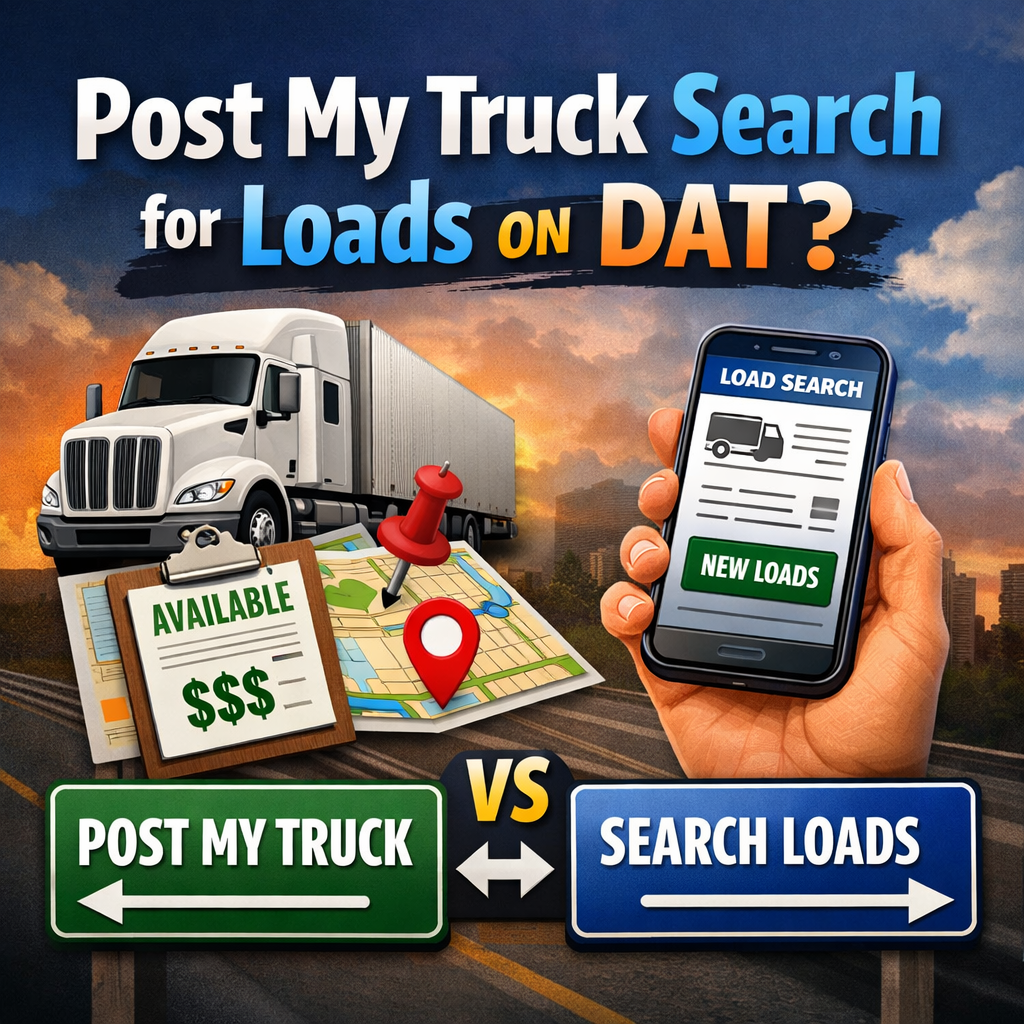
Is It Better to Post My Truck or Search for Loads on DAT?
This is one of those questions that sounds simple until you’re staring at a slow day and thinking, “I just need something booked.”
Both options work. The smarter answer is: use the method that matches your situation—your lane plan, your urgency, and how much broker risk you’re willing to accept.
Here’s the real-world breakdown so you stop guessing and start using DAT like a business tool.
Disclosure: This page contains affiliate links. If you sign up through them, I may earn a commission at no extra cost to you.
Always review pricing and eligibility at checkout. Offers can change.

Quick answer: search loads when you want control, post your truck when you need inbound calls
Search loads when you want to be picky: better lanes, better timing, better brokers.
Post your truck when you need opportunities to come to you—especially when you’re short on time or running a tougher market.
The mistake is treating these like “either/or.” The best operators use both—but in the right order.
Option 1: Searching loads (best when you want leverage)
Searching loads gives you control. You decide:
- what lanes you run,
- how much deadhead you’ll accept,
- what pickup timing works,
- and which brokers you want to deal with.
When searching loads is the better move
- You’re building a consistent lane plan.
- You have time to compare options.
- You want to negotiate off a posted rate.
- You want to vet the broker before you commit.
If you’re negotiating posted rates, read this next:
Are DAT load board rates real—or just a starting point for negotiation?
Option 2: Posting your truck (best when you need speed)
Posting your truck is basically raising your hand and saying, “I’m available.” It can bring inbound calls and emails without you chasing every listing.
When posting your truck is the better move
- You’re tight on time and need offers fast.
- You’re in a softer market and want brokers to find you.
- You’re open to multiple lanes or flexible destinations.
- You want to reduce time spent scrolling.
But here’s the risk: inbound offers can include brokers you don’t know. Which means your vetting habit matters even more.
Do this before you say yes:
How to check broker credit score and Days to Pay on DAT (before you book)

The best workflow: use both (in a specific order)
If you want a simple repeatable routine, do this:
Step 1: Start by searching loads (control)
Take 10–15 minutes and look for the best-fit loads for your lane, timing, and rate floor.
Step 2: If nothing fits, post your truck (inbound)
Now you let the market come to you—without wasting your whole day scrolling.
Step 3: Vet every inbound offer (no exceptions)
If a broker pays slow or looks messy, you’re not “missing out.” You’re avoiding a future headache.
Where the heat map fits into this decision
If you’re not sure whether to search or post, check the market signal first. In tighter markets, searching can give you leverage. In softer markets, posting your truck can create opportunity.
Heat map guide:
How accurate is the DAT Market Conditions Index (heat map), really?
Cash flow changes everything (and most drivers ignore it)
When cash is tight, drivers stop being strategic. They start being urgent. That’s when you:
- take worse lanes,
- accept weak brokers,
- and negotiate from panic instead of leverage.
Stable cash flow gives you the ability to wait for the right load instead of taking the first one that calls.
Need faster cash flow too? Here’s DAT Factoring (Outgo):

Factoring is a cash-flow tool. Always review rates, terms, and eligibility before signing.
FAQ
Should I post my truck on DAT?
Yes—if you want inbound offers and you’re flexible. But always vet brokers before accepting an offer.
Is searching loads better than posting a truck?
Searching is better when you want control and leverage. Posting is better when you need speed and more inbound options.
What if I’m under 90 days authority?
Use both, but be extra strict with broker vetting. New authority has less margin for payment surprises.
New authority guide:
Authority under 90 days on DAT: will brokers work with you?
What to do next
If you want control, start by searching. If you want inbound calls, post your truck. The win is building a repeatable workflow that protects your lanes, your rates, and your cash flow.
If you’re still choosing a plan:
DAT Standard vs Enhanced vs Pro: which plan do you actually need?
If broker nonpayment worries you:
What is DAT Assurance—and will it actually protect you if a broker doesn’t pay?