
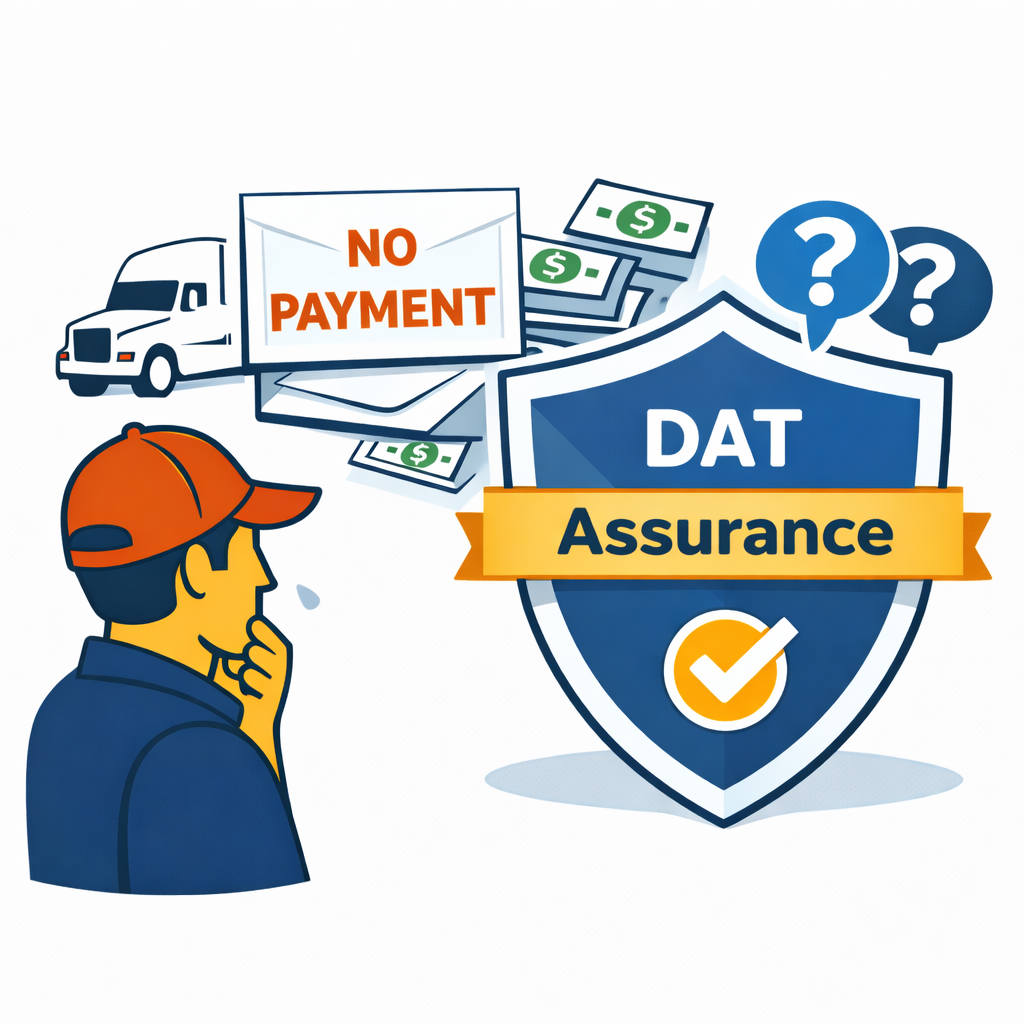
What Is DAT Assurance — and Will It Actually Protect You if a Broker Doesn’t Pay?
Most owner-operators don’t worry about nonpayment until it happens once.
And when it happens, the lesson is simple: the rate doesn’t matter if the money doesn’t show up.
This guide breaks down what DAT Assurance is (in plain English), what it’s designed to help with, and what it doesn’t replace: strong broker vetting and stable cash flow.
Disclosure: This page contains affiliate links. If you sign up through them, I may earn a commission at no extra cost to you.
Always review pricing and eligibility at checkout. Offers can change.

Quick answer: DAT Assurance can help reduce risk, but it’s not a “get paid instantly” button
Think of DAT Assurance as a risk-management layer, not a replacement for smart booking.
If your expectation is “I can stop vetting brokers because I have Assurance,” that’s how you get burned.
What problem DAT Assurance is trying to solve
Carriers deal with two different pain points:
- Nonpayment risk (the broker doesn’t pay, or payment becomes a fight)
- Slow payment (the broker pays, but not fast enough for your weekly expenses)
DAT Assurance is tied to the first issue: nonpayment risk.
The second issue—slow pay—is a cash flow problem, and it requires a different tool.
What to do before you rely on any “protection” feature
Protection features are helpful. But the smartest move is still prevention:
1) Vet the broker before you book
Check credit and payment behavior. If a broker pays slow or has weak signals, you’re taking risk that a “feature” may not fully cover.
Broker vetting guide:
How to check broker credit score and Days to Pay on DAT (before you book)
2) Understand that posted rates don’t guarantee a clean deal
A load can look great and still have issues that create disputes later (accessorial confusion, appointment changes, paperwork problems).
Rate reality check:
Are DAT load board rates real—or just a starting point for negotiation?
3) If you’re under 90 days, be extra picky
New authority has less margin for surprises. One payment issue can put you into a bad decision cycle.
New authority guide:
Authority under 90 days on DAT: will brokers work with you?
What DAT Assurance does well (practical use case)
When you’re booking spot freight, you’re constantly balancing speed and safety. If you’re trying to move faster without booking blind, DAT Assurance can be one more layer of confidence.
But here’s the rule: use Assurance as a backup plan, not your plan.
What DAT Assurance doesn’t fix
1) Slow pay
A broker can be “legit” and still pay in 30–45 days. That’s not fraud. That’s just the payment cycle. And it still hurts.
2) Bad lanes and bad math
If you take a load that doesn’t fit your lane plan or cost structure, “protection” won’t make it profitable.
3) Paperwork and communication problems
Disputes often come from unclear terms, missing documentation, or sloppy communication. Clean paperwork prevents most drama.

The real stabilizer: predictable cash flow
Here’s the part nobody wants to admit: even if you never get “stiffed,” slow pay can still wreck your week.
When cash flow is tight, you start doing dumb things:
- taking cheap freight to stay moving,
- accepting brokers you don’t trust,
- ignoring detention and accessorial details,
- and negotiating from desperation instead of leverage.
Need faster cash flow too? Here’s DAT Factoring (Outgo):

Factoring is a cash-flow tool. Always review rates, terms, and eligibility before signing.
FAQ
What is DAT Assurance?
DAT Assurance is designed to help reduce certain risks when working with brokers. It’s a layer of protection—not a replacement for vetting and clean paperwork.
Does DAT Assurance guarantee I’ll get paid?
Don’t treat any feature like a guarantee. Always review the specific terms and eligibility at checkout, and keep your broker vetting process tight.
Is DAT Assurance the same as factoring?
No. Assurance is about risk protection. Factoring is about getting paid faster and stabilizing cash flow.
What’s the best way to avoid broker problems?
Vet the broker before you book, confirm details in writing, and keep paperwork clean. Prevention beats damage control every time.
Start here:
Check broker credit score and Days to Pay on DAT
What to do next
DAT Assurance can help. But your best protection is still: book smart, vet hard, and keep cash flow stable enough that you’re never negotiating from panic.
If you’re still choosing a plan:
DAT Standard vs Enhanced vs Pro: which plan do you actually need?
If you want a better day-to-day workflow:
Is it better to post my truck or search for loads on DAT?