
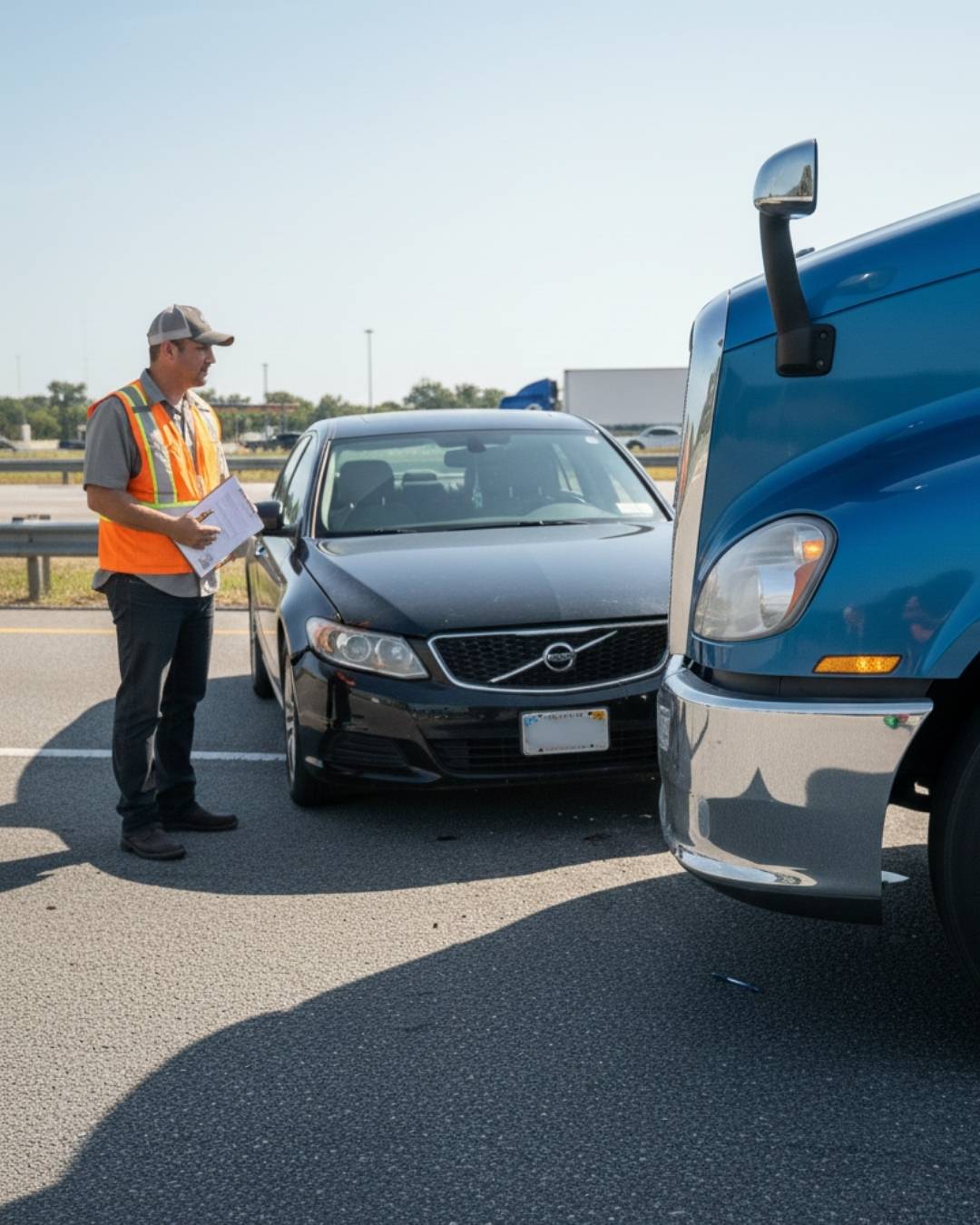
What to Do If You’re in a Truck Accident
“One minute you’re rolling… next minute you’re on the shoulder trying to think straight.”
Quick Answer
So basically… treat an accident like a fire drill: protect life first, call 911, secure the scene if it’s safe, then document everything and follow your carrier’s post-accident procedure. If DOT post-accident testing could apply, the clock starts fast.
What should you do first after a crash?
“I don’t even remember what happened… I just know my hands were shaking.”
Answer: Okay now… your first job is safety, not paperwork.
- Stop and stay at the scene unless law enforcement or EMS directs otherwise.
- Check for injuries and call 911 immediately.
- Prevent a second crash (hazards on; set warning devices only if it’s safe and you’re trained/able).
- Keep your statements factual. Don’t argue fault at the roadside.
Think about it like this…
If your steps are out of order, you can turn a bad day into a paperwork nightmare. Safety first, facts second, phone calls third.
What information should you collect at the scene?
“I thought the police report would cover everything… it didn’t.”
Answer: Let me show you what protects you later — clean documentation.
- Photos/video: vehicles, plates, DOT numbers, damage, roadway, signs, weather, and the wide scene.
- Other driver info: name, phone, company, insurance, vehicle identifiers.
- Witnesses: names + contact numbers (if they’re willing).
- Law enforcement: agency, officer name/badge number, and the report number.
- Notes: time, location (road/highway/city/state), and what happened in plain facts.
When does FMCSA treat it as an “accident” for compliance?
“Nobody was hurt… but they towed a car. Does that count?”
Answer: FMCSA’s definition matters because it drives recordkeeping and compliance steps. In general, an accident involves a CMV operating on a highway that results in a fatality, an injury requiring medical treatment away from the scene, or disabling damage requiring a tow.
So you want to make sure…
You’re documenting every event that could meet the FMCSA definition — because that’s the stuff auditors ask for later.
What accident records does FMCSA expect a carrier to keep?
“We had the report… but we didn’t have it organized. That’s what hurt us.”
Answer: FMCSA requires carriers to maintain an accident register and keep it for 3 years. The register needs specific fields so it’s easy to verify what happened.
- Date of the accident
- City/town and State nearest the accident
- Driver name
- Number of injuries
- Number of fatalities
- Whether hazardous materials were released (if applicable)
Do you have to do DOT post-accident drug and alcohol testing?
“They told me to test… but nobody could explain why.”
Answer: Sometimes. DOT post-accident testing under Part 382 depends on what happened (fatality, injury, tow-away) and, in some cases, whether the driver receives a citation for a moving violation.
Plain-language triggers drivers should recognize
Fatality accidents generally trigger testing. Injury and tow-away situations can trigger testing when the driver is cited for a moving violation. Always follow your employer’s written post-accident procedure.
- Alcohol timing: if required, attempt within 2 hours; if not done, document why. After 8 hours, stop attempts and document.
- Drug timing: if required, attempt within 32 hours; if not done, document why.
- Stay available: drivers subject to post-accident testing must remain readily available (with exceptions for medical care and getting help).
- No alcohol: if a post-accident alcohol test is required, no alcohol for 8 hours after the accident or until tested (whichever occurs first).
Does that make sense?
Think about it like this… when testing applies, it’s a stopwatch, not a suggestion. Your system has to work under stress.
Who should you notify after an accident?
“I called the wrong person first… and it made the whole thing messy.”
Answer: First responders first — then your carrier’s chain of command, then the insurance process as directed. Follow your employer’s written post-accident instructions.
- 911 / law enforcement (and EMS if needed)
- Dispatcher / safety (follow written steps)
- Insurance reporting (as directed by the carrier/insurer)
- Shipper/broker only if your carrier tells you to
What should you avoid doing after a crash?
“I talked too much at the scene… and later I wished I didn’t.”
Answer: All right, so… avoid anything that muddies the facts.
- Don’t admit fault at the roadside. Keep statements factual.
- Don’t move vehicles unless law enforcement directs it or safety requires it.
- Don’t post on social media about the accident.
- Don’t skip documentation because you’re rattled — photos + names + report number matter.
- Don’t miss testing windows if post-accident testing is triggered.
Free PDF: Accident Response & Reporting Guide
Let me show you a simple checklist you can follow under pressure. Access is gated — enter your email to unlock the free DOT compliance checklist bundle.
Note: Always follow law enforcement instructions, your employer’s written post-accident procedures, and any state/local reporting requirements that apply.
Sources (official rule text)
- eCFR — 49 CFR 390.5 (Definition of “accident”)
- eCFR — 49 CFR 390.15 (Accident register + 3-year retention)
- eCFR — 49 CFR 382.303 (Post-accident testing + time windows)
- eCFR — 49 CFR 382.209 (No alcohol for 8 hours if post-accident alcohol test required)
- FMCSA Safety Planner — Post-Accident Testing overview
- FMCSA Safety Planner — What is a Crash/Accident?