
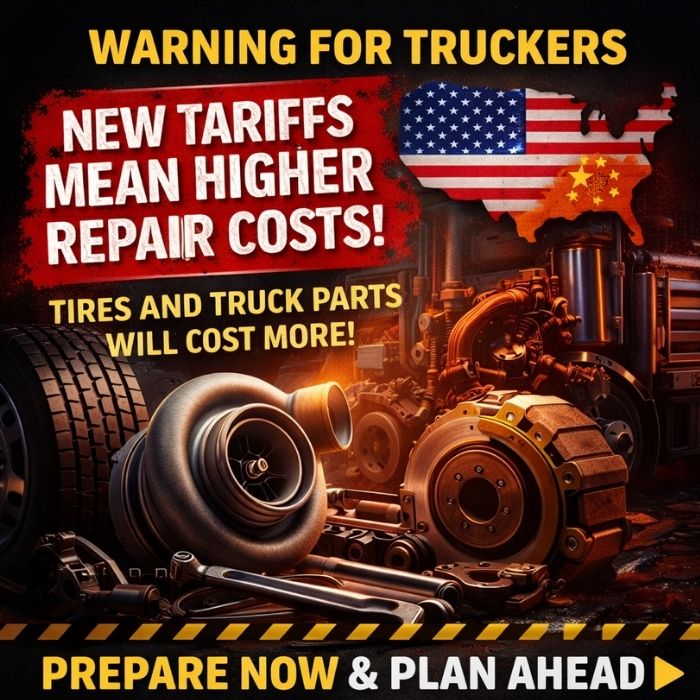
Tariffs & Truck Parts: Why Your Next Repair Will Cost More
Which truck parts are being hit the hardest by the new tariffs?
Short answer: tires and engine components.
A large share of heavy-duty truck parts are sourced through global supply chains. When new tariffs increase the cost of imported goods and materials, the first places drivers feel it are parts you replace often and parts you can’t run without.
- Tires
- Engine components (turbos, sensors, injectors, electronics)
- Brake components
- Steel-based parts (drums, suspension pieces, brackets)
Shops may not always label it as a “tariff” on the invoice, but you’ll see it in the total. Expect “surcharges,” backordered parts, and price jumps—especially on high-demand items.
Why tariffs matter to owner-operators and small fleets
Tariffs don’t just affect manufacturers—they affect your cost per mile.
When parts cost more:
- Repairs eat deeper into your revenue
- Deferred maintenance becomes tempting
- One breakdown can erase a profitable week
For an owner-operator, this isn’t theory. Higher parts prices mean less margin—especially if rates stay flat.
Should I buy a new truck now or wait for the market to settle?
It depends on your situation, but here’s what matters: if equipment pricing rises from higher input costs (steel, electronics, imported components), waiting doesn’t avoid the hit—it often locks it in later at a higher number.
If you’re already planning to replace a truck, running equipment near end-of-life, or facing major repairs, delaying the decision may not save you money. In many cases it just delays the pain.
Are “Made in USA” parts protected from price increases?
No—and this catches a lot of drivers off guard.
Even domestic manufacturers rely on imported steel, overseas electronics, and global supply chains. When their costs go up, prices usually rise across the board. “Made in USA” may still be a quality choice, but it’s not immune to market pressure.
What smart operators are doing right now
Experienced drivers aren’t panicking—they’re preparing.
What makes sense right now:
- Stocking common consumables (belts, filters, sensors, fittings)
- Fixing small issues before they become expensive failures
- Reducing emergency repairs by planning maintenance earlier
A small part in your side box can prevent a big road call later. The goal is to keep breakdowns from forcing you into premium pricing at the worst possible time.
Why this matters on the road
Tariffs don’t shut trucks down—breakdowns do.
Higher parts costs don’t just raise expenses. They raise the risk of running equipment longer than you should, delaying repairs, and getting trapped paying premium prices in an emergency.
What to do this week
- Take inventory of the wear items you go through regularly
- Price-check critical parts now—not when you’re broken down
- Plan maintenance before higher costs fully work through the supply chain
Being proactive is cheaper than being stranded.
P.S. Tool of the Day – Diesel Anti-Gel
Cold weather plus higher repair costs is a bad combination. A gelled fuel system can turn into an expensive shop visit fast.
👉 Diesel Anti-Gel
https://amzn.to/4pkxkAu
A small bottle in the side box is a lot cheaper than a winter tow or a no-start call.