
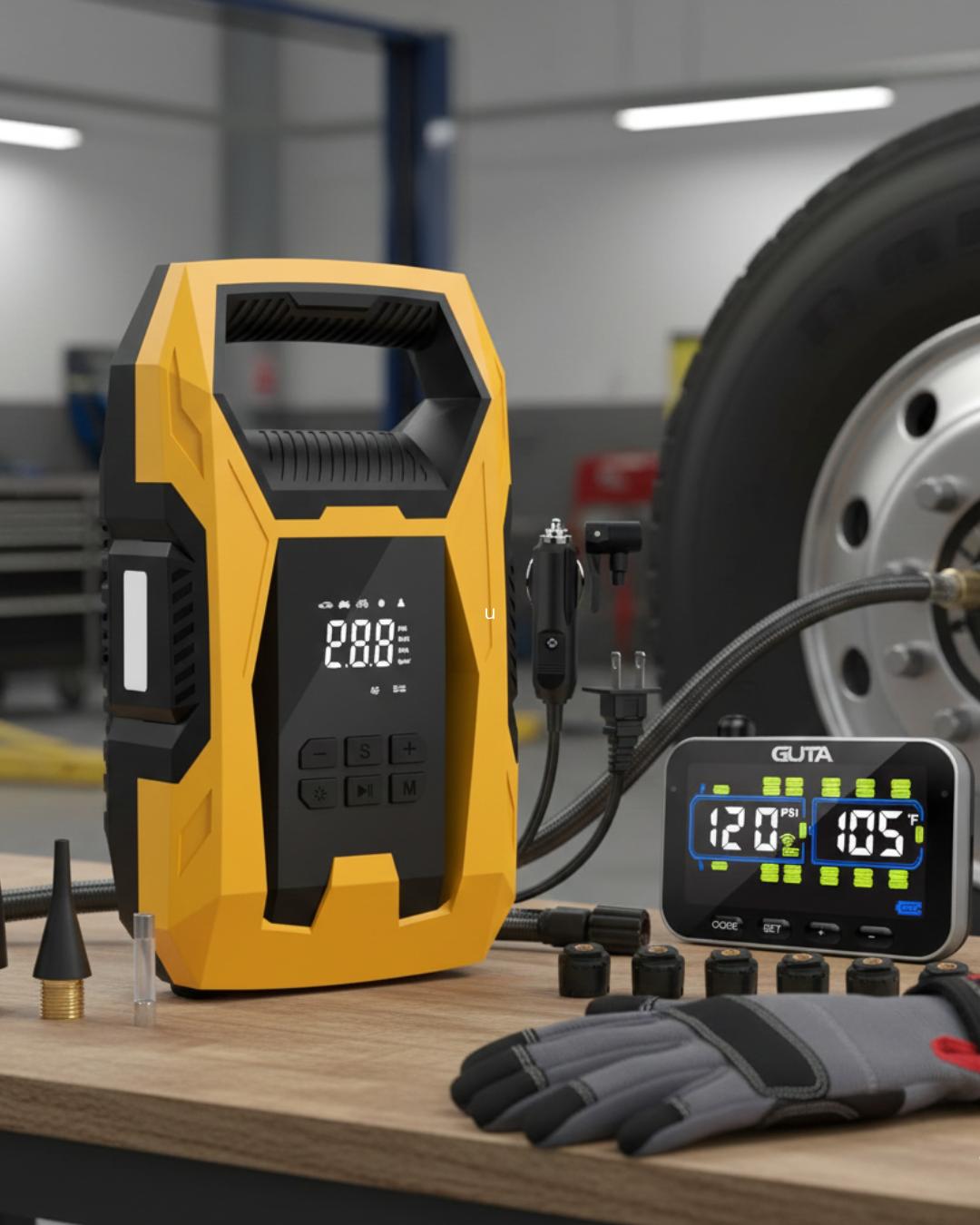
Tire Problems Cost Time and Money
Tire issues are one of the most common causes of roadside calls and unplanned downtime for truck drivers. Many of these problems start small: a slow leak, low pressure, or heat buildup that goes unnoticed. With the right tools and habits, drivers can prevent a lot of tire trouble before it turns into a blowout or failure.
TPMS: Watching Pressure and Temperature
A tire pressure monitoring system, or TPMS, helps drivers keep an eye on pressure and temperature in real time. Instead of guessing, they can see which tire is dropping or running hot while they still have time to act.
Benefits of TPMS include:
- Early warning on slow leaks.
- Alerts on over- or under-inflation.
- Better information during long pulls in hot weather.
Portable Air Compressor: Fix Small Issues Quickly
A portable air compressor lets drivers top off low tires without waiting for a shop bay or hunting for a working air hose. When paired with a good gauge, it turns a potential road call into a quick stop.
Look for compressors that:
- Are rated for heavy vehicle tires.
- Connect easily to truck power.
- Include a clear gauge or pair well with a separate one.
Heavy-Duty Gloves: Make the Work Possible
No one wants to handle wheels, caps, and hoses with bare hands in bad weather. Heavy-duty gloves protect hands from cold, grime, and sharp edges. When gloves are comfortable and available, drivers are more likely to do regular checks.
Habits That Protect Your Tires
Tools are only half the equation. Regular walk-arounds, pressure checks, and visual inspections help catch damage, uneven wear, and sidewall issues. Combining TPMS, a portable air compressor, and heavy-duty gloves with a solid routine gives truck drivers a strong defense against costly tire problems.