
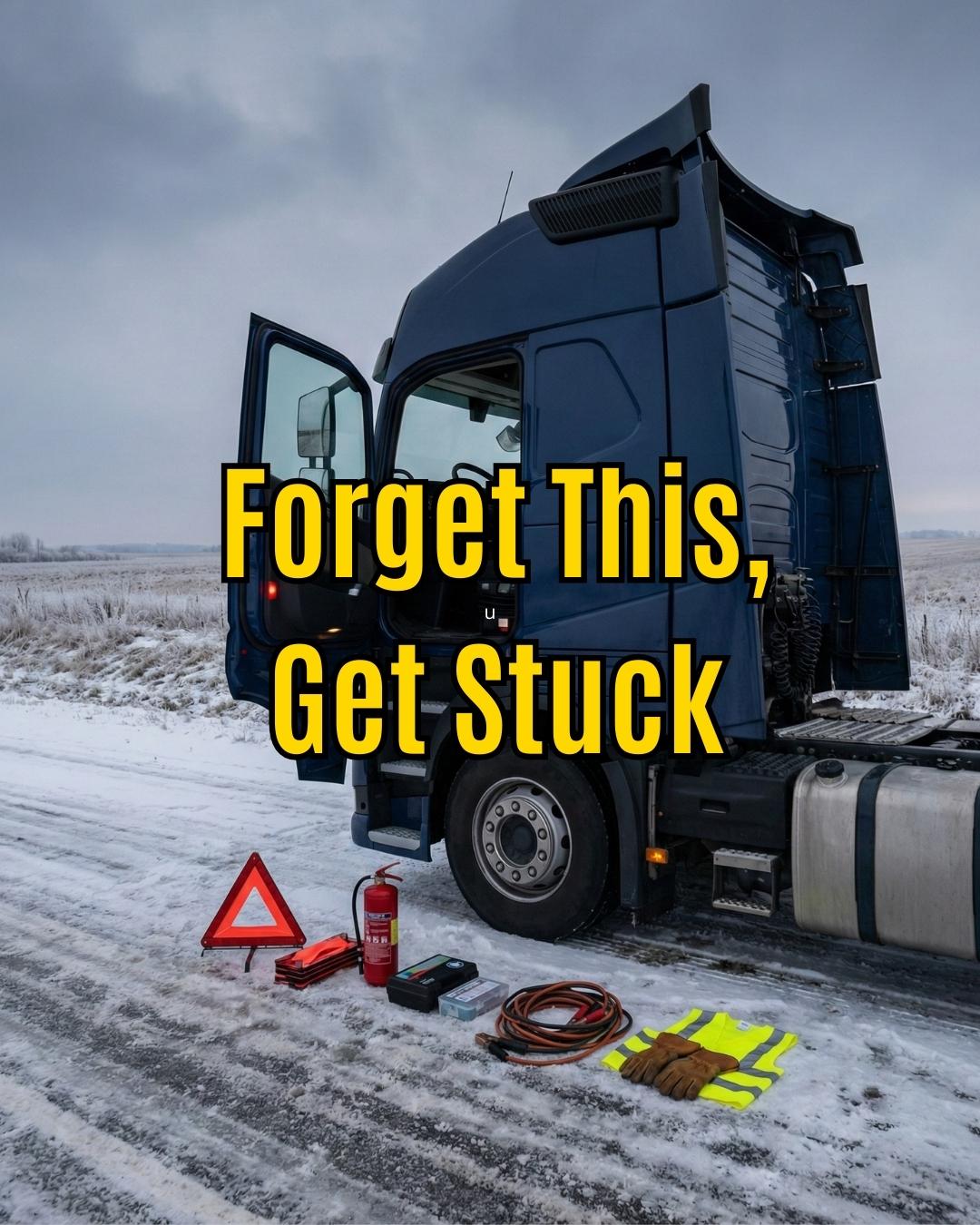
❄️ Winter emergency gear
What Winter Emergency Gear Does FMCSA Expect You to Carry in Your Truck to Stay Safe and Compliant?
Short answer: FMCSA doesn’t publish a separate “winter gear” list, but they do require specific emergency equipment on every power unit all year long — and inspectors absolutely write drivers up for missing it. On top of that, smart carriers and safety managers expect you to carry a well-stocked winter emergency kit with warmth, food, traction, and tools so you can actually live out the safety rules when the weather turns ugly.
Let me show you how those two pieces fit together so you’re covered both on paper and in real life.
1. Why Winter Emergency Gear Matters for FMCSA Compliance
Think about it like this: FMCSA rules are the floor — the minimum you must have so the truck is legal. Winter emergency gear is how you stay alive, protect freight, and avoid violations when something goes wrong at 2 a.m. in a snowstorm. FMCSA’s emergency equipment rule in 49 CFR § 393.95 says every truck, truck tractor, and bus has to be equipped with a fire extinguisher, spare fuses (if your truck uses them), and warning devices for stopped vehicles. That’s year-round, not just in winter.
In cold weather, those same items suddenly become critical. If you lose traction and wind up on the shoulder in blowing snow, your reflective triangles or flares are what keep you from getting hit. If you have a brake fire, wheel bearing fire, or wiring issue in sub-zero temps, the extinguisher has to work right now — and it can’t be frozen, discharged, or buried under a pile of stuff. If a fuse pops for wipers, headlights, or other safety-critical systems, having the right spare fuses on board is the difference between fixing the problem safely on the shoulder or being stranded with equipment that’s technically “out of service.” Winter doesn’t change the law; winter simply exposes whether you were compliant and prepared in the first place.
2. FMCSA-Required Emergency Equipment on Every Power Unit
Let’s start with what FMCSA explicitly expects you to carry. Under 49 CFR § 393.95, each truck, truck tractor, and bus must be equipped with fire extinguishers, spare fuses (if required), and warning devices for stopped vehicles. This is the non-negotiable baseline. Everything else in your winter kit builds on top of this foundation.
2.1 Fire Extinguisher (Not Optional)
FMCSA requires at least one properly rated and fully charged fire extinguisher on the power unit, and it has to be ready for use. That means it’s filled, the gauge is in the green, it’s securely mounted so it can’t slide or roll around, and the extinguishing agent doesn’t need protection from freezing. It also has to be readily accessible, not hidden under duffel bags, groceries, or dirty laundry in the sleeper. In winter, if that extinguisher is discharged, loose, frozen, or impossible to reach, you can find yourself parked on the side of the road, dealing with both a safety risk and a violation.
If you don’t already have a quality unit, a compact DOT-style extinguisher is a good benchmark for what belongs in the truck. For example, something like a DOT-approved fire extinguisher shows you the type and rating inspectors expect to see in a commercial vehicle, not a flimsy household extinguisher that was never meant for truck use.
2.2 Spare Fuses
If your truck uses fuses instead of self-resetting breakers to power required parts and accessories such as headlights, marker lights, wipers, and other safety-related systems, FMCSA expects you to carry at least one spare fuse for each type and size used on those systems. That’s not a suggestion; that’s part of the emergency equipment rule.
In winter, this becomes especially important. Losing wipers or headlights during a snowstorm because of a blown fuse can escalate from an inconvenience to a genuine emergency. When you have the correct spare fuses on board, you can safely replace a blown fuse, restore the safety system, and keep rolling legally. A simple way to handle this is to look at your fuse panel, write down the types and sizes you use, and build a small labeled organizer that lives in a sealed spot in the cab. That way you aren’t digging through a random pile of loose fuses in freezing wind trying to find the right one.
2.3 Warning Devices for Stopped Vehicles
FMCSA also requires warning devices for stopped vehicles so other drivers can see you when you’re parked on the shoulder, backing into a dark customer lot, or disabled in low visibility. Under § 393.95(f), you must carry either three bidirectional emergency reflective triangles that meet Federal Motor Vehicle Safety Standard No. 125, or at least six fusees or three liquid-burning flares with enough additional devices to meet placement requirements.
Most modern drivers rely on reflective triangles as their base requirement and may supplement them with LED beacons or additional flares for extra visibility. A set like these emergency reflective triangles gives you a good visual of what compliant equipment looks like. The key is that they’re intact, reflective, and ready to deploy, not cracked, missing pieces, or buried under other gear in a side box.
3. Winter Emergency Gear That Supports FMCSA Safety Rules
Once you’ve covered the FMCSA minimum, winter is where you decide if you’re just “legal” or truly prepared. Federal safety agencies, weather services, and large fleets all push the same idea: a well-built winter emergency kit keeps drivers safe when they’re stranded and supports the broader FMCSA expectation that you drive according to conditions, slow down, or shut down when needed.
Your winter kit doesn’t have to be complicated, but it should be intentional. Think in categories: staying warm, staying visible, maintaining traction, and handling minor medical or mechanical issues until help arrives. That mindset turns a pile of random gear into a real plan.
3.1 Warmth and Survival Gear
If you get stranded, you may be sitting for hours in freezing temperatures, possibly with the engine off or idling low to conserve fuel. That’s where your warmth and survival layer makes the difference. You want insulated gloves, a warm hat, and extra socks so you can rotate out anything that gets wet. A heavy coat or insulated coveralls and a thermal blanket or cold-weather sleeping bag give you backup if the cab heat fails.
Hand and foot warmers are small but powerful; they buy you comfort and time when the temperature drops. Extra base layers or mid-layers let you adjust as conditions change. Water should be stored where it won’t freeze solid as quickly, and non-perishable, high-calorie snacks like protein bars and nuts keep your energy up when you can’t get to food. If your current setup is light in this category, look at gear like rechargeable heated gloves, a lightweight heated vest that can run off a power bank, and solid waterproof insulated boots. The goal isn’t to turn your truck into a camping store; the goal is to be able to shut down and ride out a storm without putting your health at risk.
3.2 Visibility and Communication
When you’re stopped in snow, fog, or freezing rain, other drivers need to see you long before they reach you. At the same time, you need a reliable way to call for help. A strong winter setup includes a high-quality flashlight or headlamp with fresh batteries so you can see what you’re doing outside the truck. A reflective vest makes you stand out when you’re placing triangles or checking equipment along the shoulder.
Your phone should be fully charged before you head into known bad weather, and you should have both a 12V charger and a USB cable within reach. Many drivers also carry a power bank as backup. Extra windshield washer fluid rated for low temperatures and good wiper blades help you keep your visibility high from inside the cab, which cuts down on risk and supports the FMCSA expectation that you operate safely based on conditions.
3.3 Traction, Snow, and Ice Tools
Most winter problems start with snow and ice. A simple but complete traction kit can save you from getting stuck in a dock lot, fuel island, or on a minor incline. At a minimum, you want a sturdy ice scraper and snow brush to keep windows, mirrors, and lights clear. A compact shovel lets you dig out of snowbanks or clear around tires when needed. Traction aids like sand, kitty litter, or dedicated traction mats help you get moving on slick surfaces.
Door and lock de-icer and windshield de-icer sprays prevent you from being locked out of your own truck or blind behind frozen glass. If you run in states with chain laws, tire chains are not optional. A set such as these commercial tire chains shows you the type of hardware many mountain and northern states expect you to carry and use when conditions require it. Pair that with a solid snow and ice brush and a good diesel anti-gel treatment to help protect your fuel system in extreme cold. One icy hill or one frozen fuel line can turn into a very expensive road call and a wrecked delivery schedule if you don’t have the basics covered.
3.4 First Aid and Basic Repair Items
Winter breakdowns hurt more because they combine mechanical problems with extreme weather. A thoughtful first aid and basic repair kit lets you handle minor issues quickly and keep yourself safe while you wait for larger repairs. A trauma-style first aid kit with bandages, antiseptics, and basic medications is far better than a tiny glovebox kit that runs out after one cut. A set like this trauma first aid kit illustrates the level of preparedness that makes sense for a professional driver spending long hours away from home.
On the mechanical side, a few solid hand tools — pliers, screwdrivers, vise grips, an adjustable wrench, and a small hammer — will let you handle simple fixes. Extra fluids such as the right engine oil and coolant for your system can save you when levels drop unexpectedly. Separate work gloves keep your warmer gloves from getting ruined by oil and grease. E-side, think about your electrical support as well: heavy-duty jumper cables and portable air are not luxuries in winter. A set of 20–30 ft commercial jumper cables and a compact portable air compressor give you options when you’re in a dark lot or remote yard and need a quick assist.
3.5 Electrical Power and Jump Support
Cold weather is brutal on batteries. A marginal battery that seemed “okay” in October can fail completely in January. That’s why an independent power and jump solution is such a smart addition to a winter kit. A quality portable jump box can get you started when there’s nobody else around to give you a boost. In single-digit temperatures, that can be the difference between getting back on the road and waiting hours for a service truck.
The key idea here is self-sufficiency: instead of gambling that someone else will show up with good cables, enough air, or a charged battery pack, you build your truck so it can take care of the basics on its own. That’s good for safety, uptime, and your bottom line.
4. How Inspectors and Carriers Actually Look at Winter Emergency Gear
4.1 What Can Get You Written Up?
From an enforcement standpoint, inspectors focus first on what is clearly required under § 393.95. If you don’t have a fire extinguisher, if it’s discharged, not mounted, or not the correct type, that’s a violation. If you’re missing spare fuses where they’re required, that’s a violation. If your warning devices are missing, damaged, or incomplete, that’s a violation. These are black-and-white compliance issues that show up in roadside inspection data all year long, not just in winter.
Getting written up for missing basic emergency equipment is one of the easiest ways to hurt your company’s safety scores and draw more attention in future inspections. It’s also one of the simplest things to prevent, because you control what lives in your cab and side boxes.
4.2 What About “Extra” Winter Gear?
The extra winter items — blankets, food, shovel, traction aids, heated clothing, first aid kit, jump box, anti-gel, and so on — are not spelled out line by line in Part 393. But they are strongly encouraged by safety programs, insurance carriers, and large fleets, and they are often written into company policy. State winter rules and chain laws can also indirectly push you toward carrying certain types of equipment if you run specific corridors.
FMCSA isn’t going to cite you just for not having a heated vest. But if you consistently drive into bad conditions unprepared, keep running when you should have shut down, or can’t protect your equipment when you’re stranded, that lack of preparation becomes part of the story when there’s a crash, claim, or investigation. A strong winter kit makes it easier for you to make the right decision — to slow down, to shut down, or to wait it out — because you know you have what you need to stay safe while you do it.
5. Build Your Winter Emergency Kit in 5 Straightforward Steps
Let’s turn all of this into a simple plan you can actually execute this week.
Step 1 – Audit Your FMCSA-Required Gear
Start by walking your truck and confirming that your FMCSA-required emergency equipment is truly in order. Make sure your fire extinguisher is the correct type, appears undamaged, shows a good charge on the gauge, and is mounted in a secure bracket that you can reach quickly. Check that you have at least one spare fuse for every type and size used on your required systems. Open your storage compartment and confirm that you have three compliant reflective triangles or the correct combination of flares or fusees. If anything is missing, damaged, or questionable, fix that before you worry about adding extra winter gear.
If you need a reference point, look at examples like a DOT-approved fire extinguisher and a set of emergency reflective triangles to see the style of equipment inspectors expect to see on a professional truck.
Step 2 – Build Your Warmth & Survival Layer
Next, build a dedicated winter bag or bin that’s only for warmth and survival. Load it with heated or insulated gloves, a warm hat, extra socks, and a solid mid-layer such as a heated vest or insulated sweatshirt. Add waterproof insulated boots so you can step out and work around the truck without soaking your feet. Throw in a thermal blanket or sleeping bag and a handful of hand and foot warmers for emergencies.
Round it out with bottled water and non-perishable food that you actually like to eat. Gear like rechargeable heated gloves, a lightweight heated vest, and waterproof insulated boots gives you a good idea of what “winter-ready” looks like in real life.
Step 3 – Add Traction and Snow Tools
After warmth, focus on traction and snow tools. Make sure you have a real snow and ice brush, not a tiny one meant for a compact car. A combo tool like this snow and ice brush is a good example. Add a compact shovel that you can actually use in a truck lot, along with a small container of sand, kitty litter, or traction mats to help you get moving on slick surfaces.
Pack de-icer spray for locks and doors and a good windshield de-icer. If your lanes include mountain passes or northern states with chain laws, make sure you’re carrying appropriate tire chains such as these commercial chains, and take the time to practice putting them on in good weather. Finally, protect your fuel with a quality diesel anti-gel so one night of extreme cold doesn’t leave you gelled up and stuck.
Step 4 – Lock In Visibility, First Aid, and Power
Once the traction kit is in place, tighten up your visibility, first aid, and power support. Make sure you have a trauma-level first aid kit, not just a handful of bandages. A kit like this trauma first aid kit gives you the ability to handle cuts, scrapes, and minor injuries on the road. For power and air, invest in serious cables and equipment that can handle a commercial vehicle. A set of heavy-duty 20–30 ft jumper cables and a portable air compressor lets you manage low tires and weak batteries without being completely dependent on others.
On top of that, add a reliable portable jump box so you have your own backup start solution. The end goal is simple: you want your truck to be able to handle the most common winter headaches — low air, slow batteries, small injuries — without everything turning into a multi-hour emergency.
Step 5 – Match It to Company Policy and State Rules
Finally, line your kit up with the rules of the road you actually run. If you’re leased onto a carrier, read their written winter and emergency equipment policies and make sure your setup meets or exceeds their expectations. Then look at the states you run in December through February and note any chain laws or winter operation rules that apply to your lanes.
Your winter kit should satisfy three layers at once: FMCSA’s bare minimum (fire extinguisher, spare fuses, warning devices), your carrier’s written policy, and the reality of the routes you actually run. When those are aligned, you’re in the best position to pass inspections, keep running safely, and shut down when necessary without putting yourself at risk.
6. Bottom Line for Owner-Operators and Small Fleets
So basically, here’s how to think about winter emergency gear. FMCSA requires emergency equipment under 49 CFR § 393.95 — a fire extinguisher, spare fuses where they apply, and warning devices for stopped vehicles — and inspectors will absolutely write you up if those items are missing, damaged, or not maintained. Winter doesn’t change those rules; winter simply proves whether you took them seriously.
On top of the legal minimum, a smart winter kit adds heated clothing, real traction tools, first aid capability, jump support, and fuel protection. That combination lets you operate safely, make better decisions about when to keep rolling and when to shut down, and protect your money by avoiding preventable tow bills, breakdowns, and violations. You’re not asking drivers to buy a truck full of gadgets. You’re giving them a focused, dialed-in winter list that backs up FMCSA compliance and real-world survival at the same time.