
Published: March 1, 2026
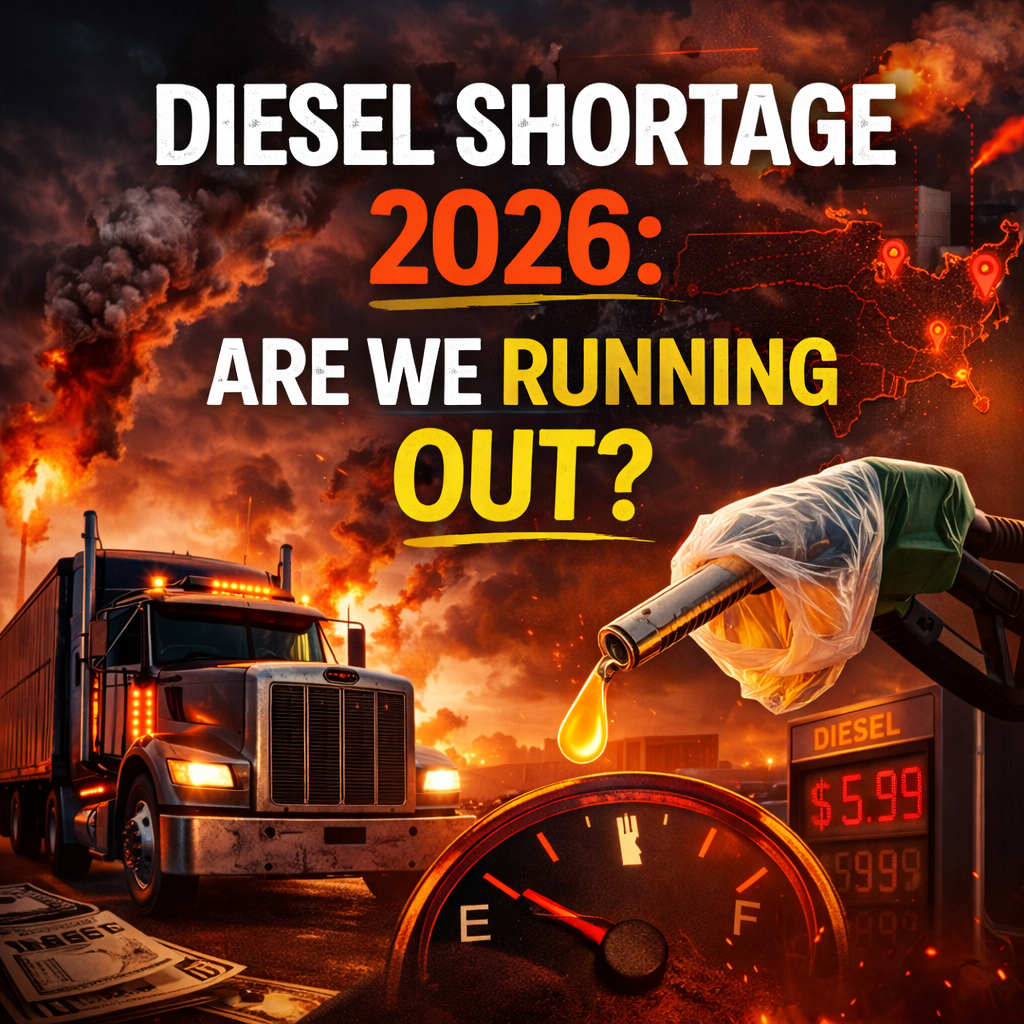
Are We About to Run Out of Diesel? Here’s What Would Actually Have to Happen
Before we get into it: If you want the full breakdown of how global tension is affecting diesel prices, freight rates, and cash flow in 2026, start here:
Middle East Conflict & Trucking 2026: What It Really Means for Your Fuel, Freight, and Cash Flow
You pull into your regular truck stop.
Half the pumps are bagged. Drivers are talking.
“Better fill everything up.”
“They’re cutting off the oil.”
“Diesel’s about to disappear.”
And now you’re wondering:
Are we actually about to run out of fuel?
Let’s cut through it.
Running Out of Diesel Is Not the Same as Diesel Getting Expensive
Prices jumping fast does not mean supply is gone.
Those are two completely different situations.
When global tension rises, oil markets react quickly. That pushes crude and diesel pricing higher.
But price volatility happens long before physical supply disappears.
The weekly national diesel benchmark published by the U.S. Energy Information Administration (EIA) shows how pricing moves during global events.
Most of the time, what drivers feel first is price shock — not shortage.
What Would Have to Happen for Diesel to Truly “Run Out”?
For diesel to truly disappear nationwide, you’d need physical infrastructure disruption.
That looks like:
- major refinery shutdowns
- pipeline failures
- government-imposed rationing
Right now, what most drivers are seeing is market reaction and price movement — not nationwide infrastructure collapse.
The EIA energy brief on global oil chokepoints explains why certain regions influence pricing — but pricing influence is not the same as physical supply collapse.
Why It Feels Like It’s About to Happen
Here’s what usually drives the panic feeling:
Fuel prices jump fast.
News coverage increases.
Drivers start talking.
Some people over-fuel “just in case.”
Local stations temporarily run low.
That last part creates the illusion of shortage.
If enough people panic-fuel at once, a truck stop can temporarily run tight.
That doesn’t mean the country is out of diesel. It means behavior moved faster than restocking.
Does the U.S. Rely Only on Foreign Oil?
No.
The United States produces a significant amount of its own crude oil and refines large volumes domestically.
Global events can influence pricing — but pricing influence is not the same as physical dependency collapse.
When Should You Actually Be Concerned?
Be concerned if you start seeing:
- multiple refineries reporting long-term shutdowns
- major pipeline disruptions
- official rationing announcements
- widespread regional supply advisories
That’s infrastructure-level disruption.
Right now, most drivers are dealing with volatility — not rationing.
Should You Fill Everything Up “Just in Case”?
There’s a difference between being prepared and being reactive.
Keeping your tanks responsibly filled while you’re running? Smart.
Tying up thousands of dollars in extra fuel you don’t immediately need? That’s cash flow sitting in metal.
During volatile markets, cash flexibility matters.
Panic-fueling beyond operational need ties up capital you might need elsewhere.
What You Should Watch Instead of Rumors
Instead of listening to speculation, pay attention to:
- weekly diesel inventory and trend signals
- refinery output reports
- regional supply updates
- how quickly stations are restocking locally
Those signals matter more than truck stop rumors.
Bottom Line
Are we about to run out of diesel nationwide? No.
Could prices stay volatile? Yes.
Could certain areas feel temporary tightness if panic-fueling increases? Possibly.
But volatility is not collapse.
The fastest way to lose money during uncertain markets is to panic.
The fastest way to protect your operation is to understand the difference between price spikes and real shortages.
If you want to understand how this fits into the full 2026 freight cycle, go here:
Return to the 2026 Trucking Impact Guide
If you want to tighten your operation and documentation while markets are volatile, grab the free checklist bundle here: