Published: March 1, 2026
What Does “Act of War” Mean in a Trucking Contract? Can a Broker Cancel Your Load?
Quick context: If you want the full 2026 situation-room breakdown (diesel, rates, cash flow, contracts), start here:
Middle East Conflict & Trucking 2026: What It Really Means for Your Fuel, Freight, and Cash Flow
You booked the load.
Rate con signed. Pickup scheduled. Fuel in the tanks.
Then the headlines get louder.
Now you’re wondering:
Can a broker cancel this because of the war and leave me stuck?
Let’s clear this up without legal fluff.
What “Act of War” Actually Means
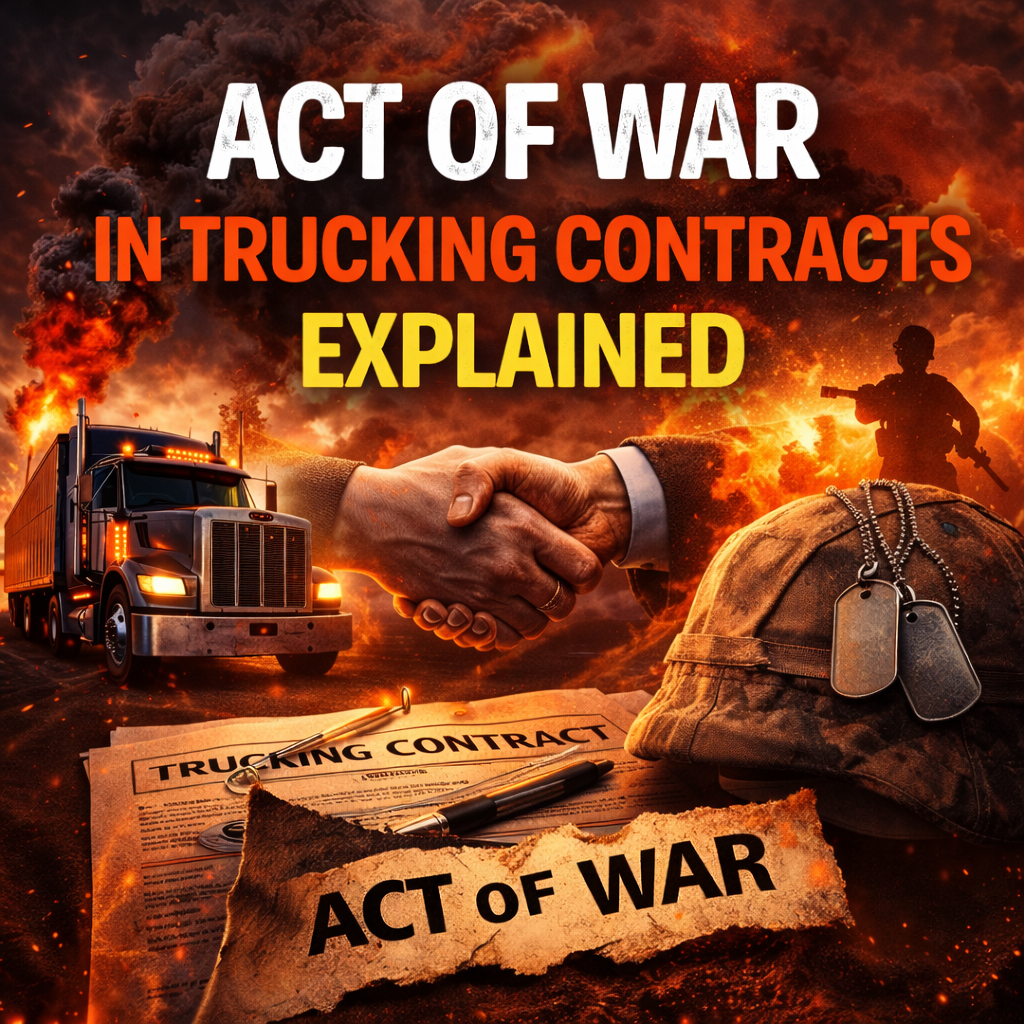
Most broker-carrier agreements include a force majeure clause. Sometimes it specifically lists “Act of War.”
Force majeure is contract language meant for extraordinary events outside anyone’s control — things that can make performance impossible.
If you want a plain-English definition (not a sales pitch), here’s a reputable legal reference:
Cornell Law School (LII): Force Majeure definition
Here’s the part most drivers misunderstand:
Headlines don’t cancel loads.
For that language to matter, there typically has to be a real disruption that directly impacts the shipment.
What “Direct Impact” Looks Like
For a broker to invoke force majeure properly, something has to prevent the load from being legally or physically completed.
Examples might include:
- a facility closing due to an emergency order
- a port closure that stops freight movement
- a government restriction that legally prevents delivery
Fear doesn’t qualify. Speculation doesn’t qualify. Social media doesn’t qualify.
There has to be real disruption.
Can a Broker Cancel Anyway?
Yes. A broker can cancel a load for business reasons.
But that’s not the same thing as force majeure.
If they cancel without a legitimate force majeure event, then your rate confirmation and broker-carrier agreement language becomes the whole ballgame.
The Part Drivers Skip: Reading the Rate Confirmation
Every rate confirmation has cancellation language.
Some are vague. Some are specific. Some protect the carrier. Some protect the broker.
If you don’t know what your rate con says about:
- TONU (truck ordered not used)
- cancellation terms
- detention
- layover
- force majeure
You’re operating on assumption.
Assumption is how drivers burn fuel and don’t get paid.
What Usually Happens During Volatility
When global tension rises, most freight still moves.
Facilities don’t instantly shut down. Warehouses don’t go dark overnight.
Business continues — often with higher costs, not full stops.
The idea that every broker can wipe out contracts because headlines are loud isn’t realistic.
Contracts generally stay enforceable unless performance becomes impossible.
Impossible — not inconvenient.
What You Should Do to Protect Yourself
During volatile periods, tighten up your process:
- confirm detention terms in writing
- clarify TONU policy before you roll
- save all communications (texts, emails, rate cons)
- avoid vague rate confirmations when you can
Professional documentation beats arguments later.
For broker compliance basics (licensing/authority context), here’s a federal reference point:
FMCSA: Broker authority overview
The Real Fear Behind the Question
Drivers don’t fear legal language.
They fear this:
“I burned fuel and time, and now I’m not getting paid.”
That’s understandable.
But most of the time, this is a contract clarity issue — not a geopolitical one.
If you understand your agreement before you move, you reduce the risk dramatically.
Bottom Line
“Act of War” does not mean:
“Broker can cancel whenever they want.”
It’s meant for extraordinary events that make performance impossible.
Most global tension affects pricing and volatility — not contract validity.
If freight can legally and physically move, it usually will.
The best protection isn’t panic.
It’s reading what you signed.
Want the full picture (diesel, rates, cash flow, and how this all connects)?
Go back to the main 2026 trucking impact guide
If you want to tighten your operation and documentation while markets are volatile, grab the free checklist bundle here: