
Published: February 4, 2026
1099 vs W-2 Truck Driver Taxes: What Changes, What Doesn’t, and What Costs You
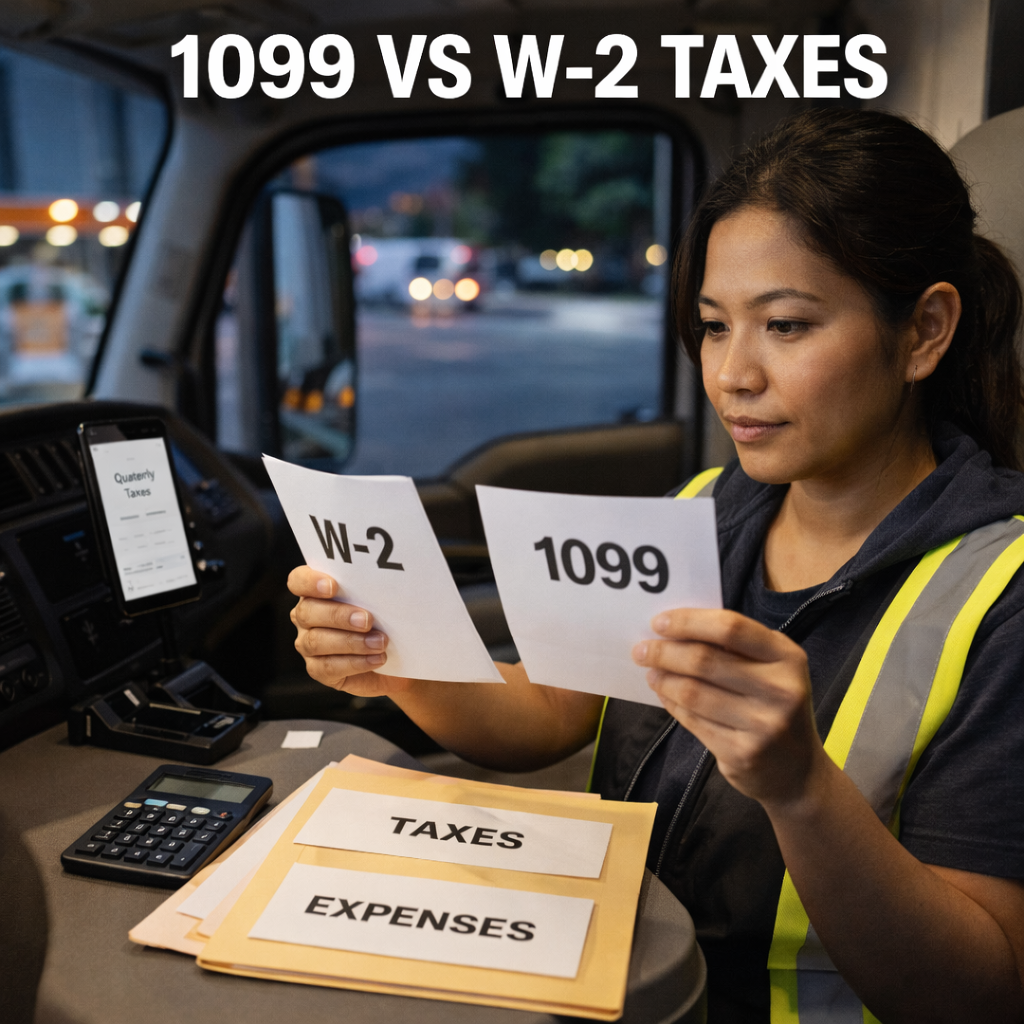
The 1099 vs W-2 truck driver tax difference is one of the most important — and most misunderstood — parts of trucking finances. Many drivers assume the difference is just how you get paid. In reality, it changes what you can deduct, how much tax you owe, and how exposed you are if something goes wrong.
This article breaks down what actually changes between 1099 and W-2 status, what stays the same, and how smart drivers avoid tax mistakes that quietly drain thousands of dollars each year.
Prefer to watch or listen instead?
This topic is covered in the Freight Pro Hub Podcast. If you’d rather hear the breakdown in plain language, watch the episode here:
Want the full series?
Watch the complete playlist here:
Freight Pro Hub Podcast Playlist
What does 1099 vs W-2 really mean for truck drivers?
At its core, the difference between 1099 and W-2 status is about who the IRS considers responsible for the business.
- W-2 driver: You are an employee. The company controls most aspects of the job and handles payroll taxes.
- 1099 driver: You are considered self-employed. You are responsible for your own taxes, deductions, and compliance.
This distinction matters far more than most drivers realize because the tax code treats employees and self-employed workers very differently.
How W-2 truck driver taxes work
As a W-2 truck driver, your employer:
- Withholds federal and state income tax
- Pays half of Social Security and Medicare taxes
- Issues a W-2 at year end
The upside is simplicity. Taxes are mostly handled before the money hits your bank account.
The downside is deductions. Since changes to tax law in recent years, most W-2 drivers cannot deduct unreimbursed job expenses on their federal return.
That means things like:
- Supplies
- Work gear
- Phone use
- Training costs
…usually don’t reduce your taxable income unless your employer reimburses you under an accountable plan.
Outbound reference: IRS — Employee vs. Independent Contractor
How 1099 truck driver taxes work
If you’re paid as a 1099 contractor, the IRS treats you as running a business.
That means:
- No taxes are withheld automatically
- You pay both halves of Social Security and Medicare (self-employment tax)
- You must make estimated quarterly payments
The trade-off is deductions.
As a 1099 truck driver or owner-operator, you can generally deduct ordinary and necessary business expenses, such as:
- Fuel and maintenance
- Insurance
- Licensing and permits
- Accounting and software
- Eligible per diem
Used correctly, deductions can significantly reduce taxable income. Used incorrectly, they trigger audits.
Outbound reference: IRS — Schedule C (Form 1040)
The biggest myth: “1099 always pays more”
Many drivers are told they’ll “make more money” by switching to 1099. On paper, the rate might look higher.
What’s often ignored:
- Self-employment tax
- Unpaid benefits
- Unreimbursed expenses
- Higher compliance responsibility
If the pay increase doesn’t exceed those added costs, the driver ends up worse off — not better.
This is why understanding your classification is critical before tax season.
How 1099 vs W-2 ties into the OBBB tax conversation
With increased attention around the One Big Beautiful Bill (OBBB), many drivers are looking for new credits, deductions, or ways to lower their tax bill.
Here’s the key point: OBBB does not change your worker classification.
If you’re W-2, you’re still limited in deductions.
If you’re 1099, you still carry self-employment responsibility.
That’s why we place this topic inside the broader tax framework:
👉 2026 Trucker Tax Guide: What OBBB Really Means
Common tax mistakes drivers make with 1099 and W-2 status
❌ Being misclassified
Some drivers are paid as 1099 contractors even though they function like employees. This creates tax and legal risk.
❌ Not setting aside money for taxes
1099 drivers often underestimate quarterly payments and get hit with penalties.
❌ Over-deducting expenses
“Everything is a write-off” is how audits start.
❌ Assuming deductions make up for low pay
Deductions reduce tax — they don’t replace income.
Outbound reference: IRS — Small Business Audits
How smart truck drivers approach 1099 vs W-2 taxes
The FreightProHub approach is simple:
- Know your classification before you file
- Understand what deductions you actually qualify for
- Track income and expenses consistently
- Don’t rely on social media tax advice
- Use a tax professional who understands trucking
This keeps your tax strategy clean, defensible, and predictable.
Final word from FreightProHub
The difference between 1099 and W-2 truck driver taxes isn’t about which one is “better.” It’s about which one fits your situation — and whether you understand the rules that come with it.
When drivers get this wrong, the cost doesn’t show up immediately. It shows up in penalties, audits, and surprises they didn’t plan for.
Get the classification right first. Everything else builds on that.
Combat Wisdom: Higher pay doesn’t matter if the tax bill eats it alive.