
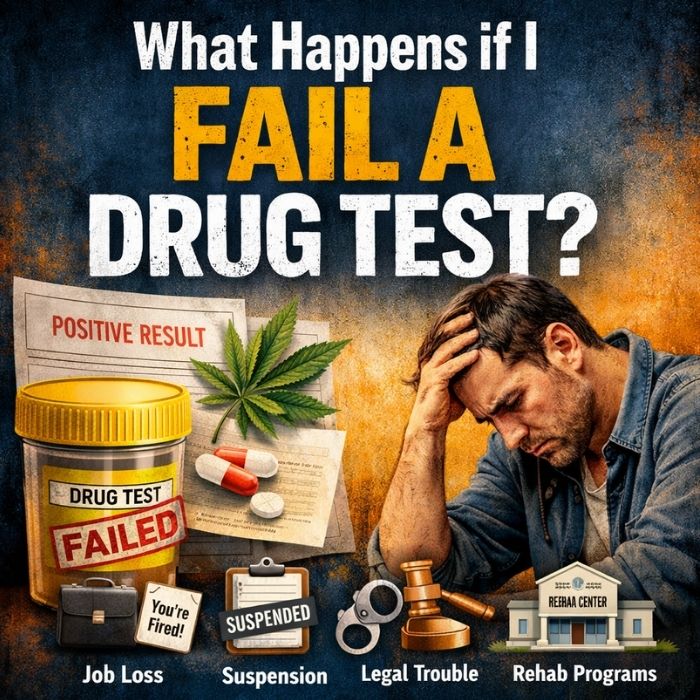
What Happens If You Fail a DOT Drug Test?
Company drivers and owner-operators — here’s what happens next, what you’re allowed to do (and not do), and the real-world impact on your income.
A failed DOT drug test can shut a driver down fast — not because someone “feels fine,” but because DOT rules prohibit a driver from performing safety-sensitive work (including driving a CMV) until the Return-to-Duty (RTD) process is completed. That applies whether you’re a company driver or an owner-operator.
What happens immediately if you fail a DOT drug test?
If you have a verified positive DOT drug test result, the employer must immediately remove you from performing safety-sensitive functions. In plain terms: once it’s verified, you’re not legally “in service” as a driver until you complete the RTD steps.
Is refusing a DOT drug test treated the same as failing?
In most cases, yes. FMCSA explains that a driver’s refusal is generally treated like a positive test. That means you must be removed from safety-sensitive work and complete the RTD process with a DOT-qualified SAP (Substance Abuse Professional).
DOT rules also define what counts as a refusal (for example: not appearing when directed, not providing a specimen, leaving the site before completion, and other conduct). The point is simple: “I didn’t take it” is not a loophole.
Can you keep driving while you “work it out”?
No. DOT rules don’t allow an employer to return a driver to safety-sensitive work after a verified positive (or refusal) until the RTD process is successfully completed. So you can’t legally “run a few loads” while you try to fix it quietly on the side.
What is the Return-to-Duty (RTD) process?
So basically, the RTD process is the DOT’s required path back to legal, safety-sensitive work after a drug/alcohol violation. It runs through a DOT-qualified SAP and it has to be done in the right order.
- SAP evaluation: The SAP evaluates the driver and recommends education and/or treatment.
- Completion of recommendations: The driver completes what the SAP requires.
- SAP follow-up evaluation: The SAP determines whether the driver complied and is eligible for RTD testing.
- Return-to-duty test: The driver must complete an RTD test with a negative result before returning to safety-sensitive work.
- Follow-up testing plan: The SAP sets a follow-up testing plan after return to duty.
How many follow-up tests are required after you return?
DOT requires the SAP to set a follow-up testing plan, and there is a minimum requirement: the SAP must direct at least six unannounced follow-up tests in the first 12 months after the driver returns to safety-sensitive functions.
Okay now — this is where a lot of drivers get caught slipping. Getting back to work is not the finish line. Follow-up testing is part of the deal, and it’s designed to be unannounced.
Does DOT force your employer to fire you?
No. DOT rules focus on eligibility to perform safety-sensitive work (driving). They require removal after a verified positive/refusal and completion of RTD steps before return. Employment decisions (termination, leave, rehire policy, etc.) are up to the employer and company policy.
So you want to make sure you separate two things: (1) what DOT says you’re legally allowed to do, and (2) what your company decides to do as an employer.
How does this hit owner-operators differently?
Company drivers and owner-operators both get removed from safety-sensitive duty after a verified positive/refusal. The difference is the business impact.
- Your revenue stops when you can’t legally drive.
- Loads get canceled or reassigned depending on dispatch and contract terms.
- Contracts can get strained if you’re unable to fulfill obligations.
- Fixed costs keep drafting (truck payment, insurance, plates, maintenance, personal bills) even when the wheels aren’t turning.
Think about it like this: a company driver may lose miles; an owner-operator can lose the whole week’s cashflow while the bills keep coming.
What should you do first if you fail (or refuse) a DOT drug test?
All right, here’s the smart order of operations:
- Stop driving if you’ve been removed from safety-sensitive work. Don’t gamble your CDL and your business.
- Start RTD by working with a DOT-qualified SAP.
- Follow the SAP requirements (education/treatment), then complete the SAP follow-up evaluation.
- Complete the RTD test (must be negative before returning to safety-sensitive duties).
- Stay ready for follow-up testing (minimum six unannounced tests in the first 12 months).
FMCSA compliance tools
Let me show you… if you’re tightening up your compliance game with practical tools and checklists, start here:
Read what other truckers are reading
- DOT audits and why carriers fail them
- Roadside inspection document checklists
- Accident response steps that protect your CDL and your insurance claim
Disclaimer: This article is informational and not legal advice. For official requirements, always confirm directly with DOT/FMCSA sources.
Sources
- U.S. DOT (ODAPC) — 49 CFR §40.23 (actions after verified results)
- U.S. DOT (ODAPC) — 49 CFR §40.191 (refusal to test)
- U.S. DOT (ODAPC) — 49 CFR §40.305 (negative RTD test required)
- U.S. DOT (ODAPC) — 49 CFR §40.307 (follow-up testing minimums)
- FMCSA — What if I fail or refuse a test?
- FMCSA Clearinghouse — The Return-to-Duty Process (PDF)