
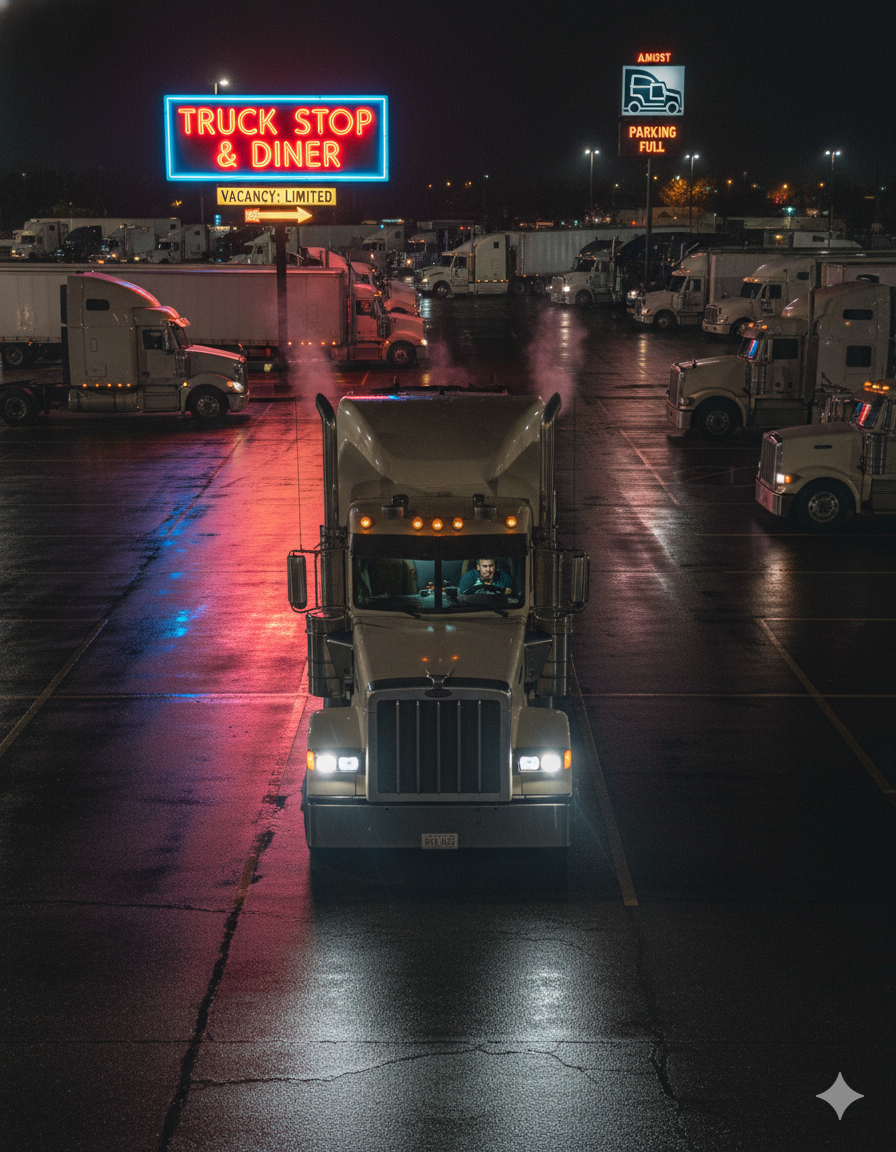
How Drivers Secure Safe Overnight Parking When Lots Are Packed & HOS Clock Is Ticking
If you’ve ever circled a truck stop at midnight praying for one open spot, you know this struggle all too well.
Safe overnight parking isn’t just a comfort issue — it’s a compliance and safety problem that affects every driver on the road. As freight slows and hours tighten, more truckers find themselves parked on exit ramps, abandoned lots, or sketchy side roads just to stay legal. But with the right strategy, you can protect your rig, your safety, and your logbook.
1. The Parking Crisis No One’s Solving Fast Enough
According to a 2024 ATRI report, over 98% of U.S. truck drivers regularly struggle to find safe parking by the time their Hours of Service (HOS) clock runs out. That shortage leads to millions of wasted miles and dangerous last-minute decisions every year.
What makes this problem worse is timing — most spaces fill up between 6:00 PM and 9:00 PM. After that, it’s a game of chance.
2. Where Drivers Are Actually Finding Safe Spots
All right, so let’s talk about real-world solutions — not theory. Here’s what experienced drivers are doing right now to park smart and stay safe:
- Reserve early through apps: Use TruckPark, RigSmarter, or ParkMyTruck to reserve legal spots in advance. Many truck stops now offer in-app booking — usually $10–$20 per night, worth every penny for peace of mind.
- Use shipper and receiver lots (with permission): Many receivers will let you stay overnight if you’re loaded or delivering next morning. Always ask the guard shack first — and get it in writing or recorded on your BOL notes.
- Plan for alternate rest areas: Use Google Maps satellite view or FHWA rest area directories to find overlooked pull-offs before you hit your limit.
3. Avoiding Unsafe or Illegal Spots
Parking on highway shoulders, ramps, or abandoned gas stations might seem harmless — until a state trooper knocks at 2 AM or a thief targets your trailer. States like Illinois, Georgia, and California have increased enforcement for ramp parking in 2025, and tickets can cost up to $250 per violation.
When you’re out of options, remember this: it’s better to shut down legally an hour earlier than risk a ticket, theft, or accident. No load is worth your life or CDL.
4. Veteran Driver Parking Strategy
Here’s how most pros handle the problem:
- Plan your route before leaving the yard. Look at where you’ll likely stop and have two backup locations saved in your GPS.
- Park before the rush. Aim to shut down between 4–6 PM if possible. You’ll sleep better and start earlier than the crowd.
- Use smaller towns and industrial areas wisely. Some business parks have safe overnight zones if you ask the local police first — many welcome truckers as long as you’re respectful.
5. Parking Apps Worth Having on Your Phone
Don’t waste time guessing. These apps are favorites among U.S. drivers:
- TruckPath — Crowdsourced reviews, real-time parking availability.
- Trucker Path — Best for truck stop info and live updates.
- SmartTruckRoute — Avoid low bridges, tight turns, and find nearby rest stops.
6. Final Word
Truck parking will stay tight until the industry catches up, but that doesn’t mean you’re powerless. The drivers who plan ahead, use technology, and protect their HOS are the ones who finish the week stress-free and ticket-free.
So basically — plan your stop like your paycheck depends on it, because it does.
Sources:
ATRI Truck Parking Shortage Report 2024
Federal Highway Administration Rest Area Resources
TruckPark Official Site