Kodiak + Bosch Partner at CES 2026: What “Production-Grade” Autonomous Trucks Really Mean for Trucking
So basically… driverless trucks are moving from test mode to scale mode — and that changes the game for freight.
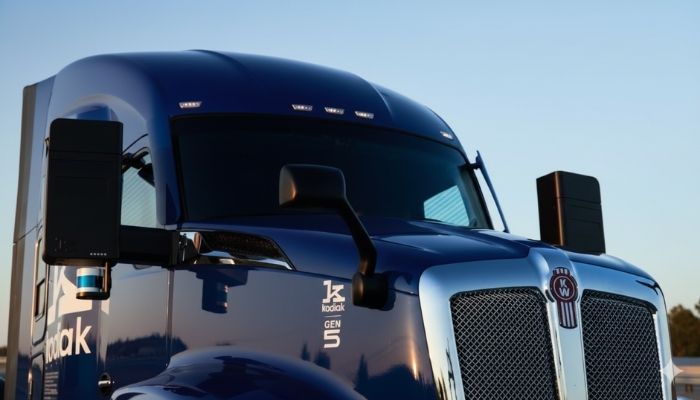
Okay now… on January 5, 2026, Kodiak AI and Bosch announced a partnership aimed at building a production-grade, safety-redundant autonomous trucking platform. Kodiak brings the autonomy system (Kodiak Driver), while Bosch provides key hardware like sensors and steering and actuation components.
The important part isn’t the headline. It’s what this signals.
Autonomous trucking is moving from pilot programs toward repeatable, scalable manufacturing.
What did Kodiak and Bosch actually announce?
The companies announced a strategic agreement to industrialize the hardware stack needed for Kodiak’s autonomous system, using Bosch’s automotive-grade components integrated into a redundant platform designed for commercial deployment.
Key details that matter
- Bosch will supply critical vehicle hardware, including sensors and steering and actuation systems.
- Kodiak will provide the autonomous driving software known as Kodiak Driver.
- The platform is designed to be production-ready, not a one-off prototype.
- The system may support factory integration and certain retrofit or upfit paths depending on configuration.
- A Kodiak-powered truck is scheduled to be displayed in the Bosch booth at CES 2026.
Think about it like this… this is the difference between a custom build and a factory-repeatable truck that fleets can deploy at scale.
What does “production-grade” and “redundant” mean?
Production-grade
Production-grade means the technology is designed around standardization, repeatability, and real-world supply chains. It signals readiness to move beyond limited pilots into broader commercial use.
Redundant
Redundancy means the system is built so that a single failure does not automatically result in loss of control. In trucking terms, it’s comparable to layered safety systems — the goal is fail-safe operation, not perfection.
Is this about replacing drivers?
This is where people jump too fast.
This announcement is about scaling the technology platform. It does not mean nationwide driverless freight tomorrow.
What it does show is pressure on autonomous trucking companies to prove commercial viability. Long-haul freight routes are often more predictable than urban environments, which is why autonomous trucking continues to attract investment.
So you want to make sure you separate technology scaling from workforce impact. The speed of change will depend on lanes, customers, insurance requirements, and federal regulation.
Where does the federal government fit in?
All right, let’s talk about regulation.
The FMCSA has acknowledged the need to safely integrate automated driving systems into commercial motor vehicles. At the same time, many existing safety rules were written around human drivers, which creates friction when trucks are designed to operate without a person performing certain tasks.
So basically… even if the technology is ready to scale, compliance frameworks still have to catch up.
What should owner-operators and small fleets watch?
1. Deployment lanes
Early deployment will likely focus on defined routes with predictable conditions.
2. Insurance and data use
Advanced sensors and continuous recording may change how accidents and claims are reviewed. More data often means more scrutiny.
3. FMCSA exemptions and notices
Ignore rumors and focus on official FMCSA and Federal Register updates related to autonomous commercial vehicles.
4. Retrofit versus factory integration
If retrofit options expand, adoption could move faster than waiting on new truck purchases alone.
Does that make sense?
Bottom line
Let me show you the takeaway:
This Kodiak and Bosch partnership is a scale signal. It does not guarantee immediate nationwide rollout, but it shows autonomous trucking is being engineered for repeatable commercial deployment.
Sources
-
Reuters — Kodiak AI teams up with Bosch to scale hardware for self-driving trucks (Jan 5, 2026)
https://www.reuters.com/business/autos-transportation/kodiak-ai-teams-up-with-bosch-scale-hardware-self-driving-trucks-2026-01-05/ -
Kodiak AI Newsroom
https://kodiak.ai/news/kodiak-bosch-scale-autonomous-trucking-hardware -
FMCSA — Safe Integration of Automated Driving Systems
https://www.fmcsa.dot.gov/newsroom/safe-integration-automated-driving-systems-equipped-commercial-motor-vehicles