
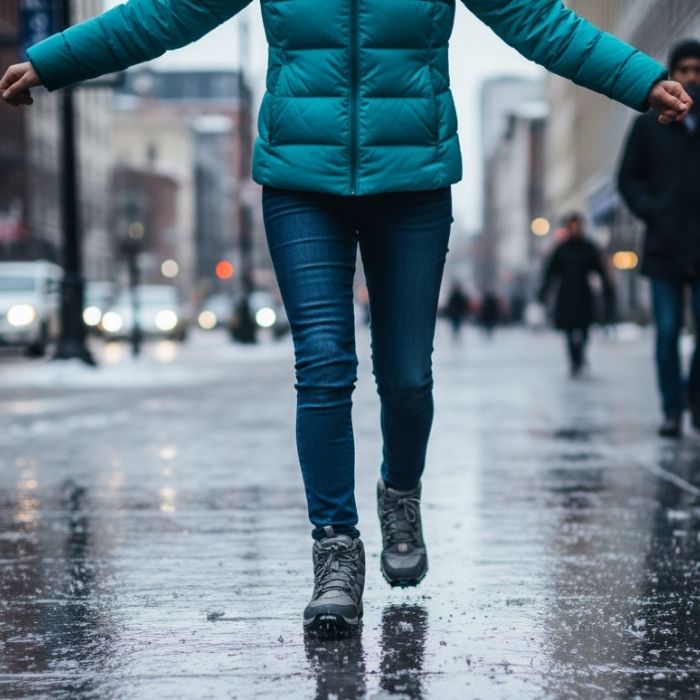
How to Walk on Black Ice Without Falling (The “Pro” Method)
Published: January 31, 2026
Winter in 2026 isn’t getting any warmer, and if you live anywhere with a freeze-thaw cycle, you know the real enemy isn’t the snow—it’s black ice. It’s that invisible thin glaze that makes a sidewalk or parking lot as slick as a greased frying pan.
If you’ve ever taken a hard fall onto pavement, you know it happens in a split second. One minute you’re walking to your truck or your front door, and the next, you’re looking at the clouds wondering what just happened. Here’s how the pros handle ice without ending up in the ER.
What exactly is black ice?
Black ice isn’t actually black—it’s usually transparent ice that forms on dark pavement, so it blends in and looks like a wet spot. It often shows up when melted snow or light moisture refreezes fast, especially overnight or early morning when temps drop.
Master the “Penguin Walk”
Before we talk gear, you need to change how you move. Most people walk with a normal stride and shifting weight. On ice, that’s a recipe for getting dropped.
- Keep your weight centered: Keep your center of gravity over your feet (don’t reach forward).
- Shorten your stride: Take small, shuffling steps.
- Hands out of pockets: You need your arms for balance, and you need your hands free if you slip.
- Point toes slightly outward: A wider base helps you stay stable.
Why surface traction is the real solution
You can be the best penguin-walker in the world, but if you’re crossing a sloped lot, a slick sidewalk, or a greasy fuel island, physics is going to win. Technique helps—but traction is what keeps you upright.
For walking around the rig or in parking lots, I’ve found the Yaktrax Diamond Grip is one of the best options because it’s designed for winter walking conditions and stays relatively low-profile compared to big spike-style cleats.
Check Yaktrax Diamond Grip on Amazon
Your Black Ice Q&A (People Also Ask)
Q: Can you see black ice at night?
A: Hardly ever. If the pavement looks dark and glossy instead of matte gray, assume it’s ice—especially early morning and after sunset.
Q: What shoes are best for black ice?
A: Winter boots can help, but black ice can beat almost any sole. The safest move is combining smarter steps with add-on traction when conditions call for it.
Q: Is it safer to walk on snow or ice?
A: If you have a choice, aim for crunchy snow because it has natural grip. Avoid smooth, shiny cleared areas—that’s where ice hides.
Q: Do ice cleats work on wet metal?
A: Wet metal is high-risk—catwalks, steps, liftgates, and dock plates can turn into slip zones. Move slow, keep three points of contact when climbing, and treat wet metal like it’s ice. Traction gear helps, but smart movement still matters.
A message for the road warriors
If you run winter lanes, you already know a “dry” looking lot can be a trap. I’ve seen drivers go down just stepping out to check tires. Don’t be the one who gets sidelined by a simple slip.
If you’re a driver (or you love one), here’s my vetted list of cold-weather gear that’s actually useful when the weather turns ugly:
Winter Truck Driving Gear & Safety Essentials
Related reads
If you’re building a safer winter routine, these will help:
- Yaktrax Diamond Grip: Stop Winter Slips
- Yaktrax Diamond Grip Review for Work Boots
- Best Safety Gift for Delivery Drivers
- Traction Cleat Maintenance: Make Your Gear Last
Got senior parents? Don’t wait until someone falls. Read this next: Best Ice Cleats for Seniors: Keep Your Parents Safe.
Home base: FreightProHub
Share the safety
If you’ve got a family member who walks to work or a friend who’s always out on the road, send them this article. Most people don’t think about winter falls until they’re already on the ground. Let’s help them stay upright this year.
Sources
- National Weather Service: Ice and winter safety
- Yaktrax: Diamond Grip product details
- AP News: “Walk like a penguin” safety method
Affiliate disclosure
This page contains affiliate links. If you click and make a purchase, I may earn a commission at no extra cost to you.
As an Amazon Associate I earn from qualifying purchases.