
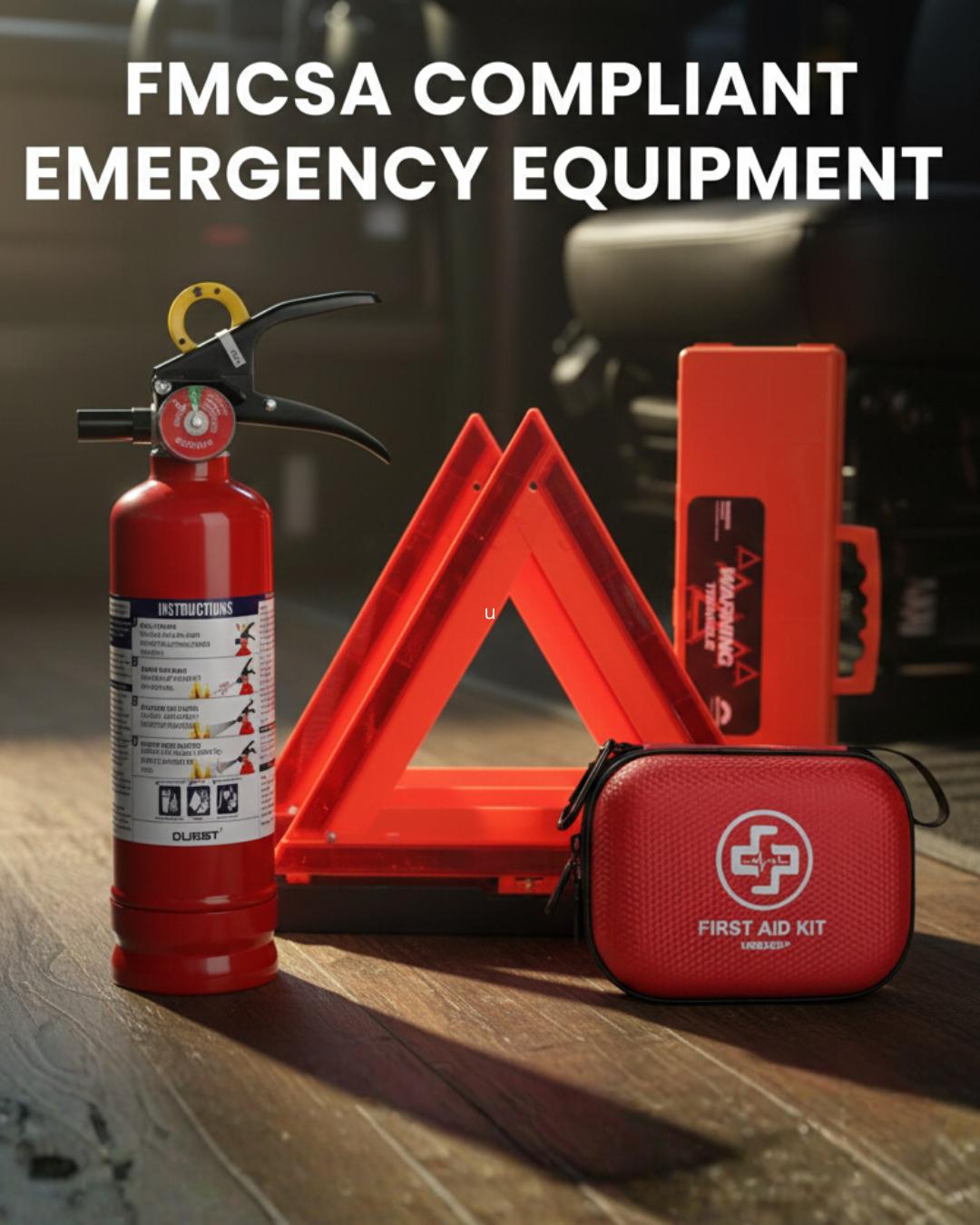
Why FMCSA Emergency Equipment Matters
FMCSA emergency equipment rules are not just about passing inspections. The right gear helps protect the driver, the motoring public, and the equipment when something goes wrong on the road. Three core items you should always have in the truck are reflective warning triangles, a properly rated fire extinguisher, and a trauma first aid kit.
Warning Triangles: Protecting the Scene
When a commercial motor vehicle is stopped on the shoulder or in a hazardous spot, warning devices help approaching traffic see the truck in time to react. Reflective warning triangles are the standard tool for this job.
Drivers should know how to:
- Place the three triangles at the correct distances based on FMCSA guidelines.
- Set them up quickly and safely, facing oncoming traffic.
- Use them in different situations, including curves, hills, and limited visibility.
Keeping triangles in good condition and easy to reach saves time during a breakdown or flat tire.
Fire Extinguisher: Rated and Ready
FMCSA regulations require commercial vehicles to carry at least one fire extinguisher that is properly rated, mounted, and inspected. The extinguisher should be:
- Rated for both Class B and Class C fires.
- Securely mounted in a bracket and easy to access.
- Inspected regularly to make sure the gauge is in the green and the pin and seal are intact.
A working extinguisher can limit damage from a small fire and provide vital seconds to get clear of a more serious situation.
Trauma First Aid Kit: Beyond Simple Bandages
Many basic first aid kits are built around minor cuts and scrapes. A trauma-focused kit is better suited for the type of injuries that can happen around heavy equipment, securement gear, and traffic.
A strong trauma kit for truck drivers may include:
- Trauma dressings and gauze for larger wounds.
- Tourniquets and pressure bandages.
- Gloves, antiseptic wipes, and basic tools like shears.
Drivers should know where the kit is stored and review the contents so they are not seeing it for the first time during an emergency.
Staying Ready for Breakdowns and Inspections
Having FMCSA emergency equipment in the truck is one thing; keeping it organized, accessible, and in good working order is another. Make it a habit to check triangles, the fire extinguisher, and the trauma kit during regular inspections. That way you are ready for both a surprise roadside inspection and an unexpected breakdown or incident.