
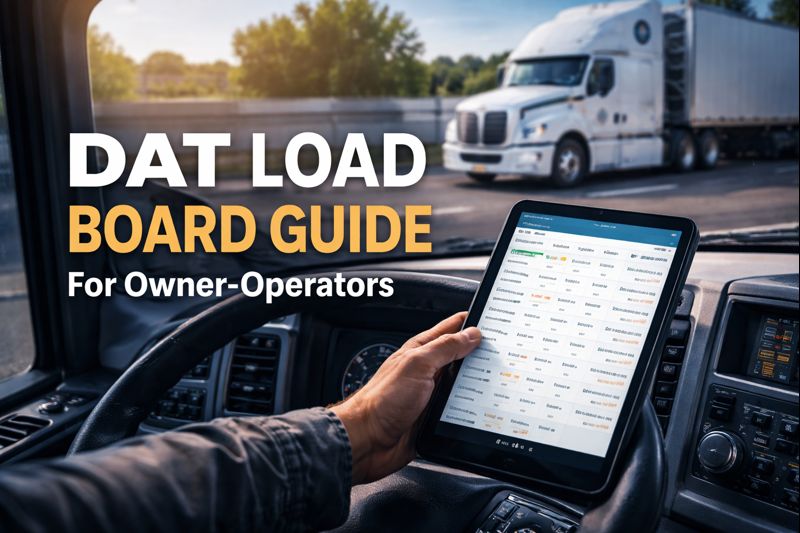
DAT Load Board: What Owner-Operators Need to Know
Find better freight without guessing or getting burned. DAT can give you market visibility — but it won’t fix bad lanes, bad math, or bad broker choices. This page shows you how to think before you click “buy.”
Disclosure: This page contains affiliate links. If you sign up through them, I may earn a commission at no extra cost to you.
Always review pricing and eligibility at checkout. Offers can change.

Need faster cash flow too? Here’s DAT Factoring (Outgo):

Is DAT right for you?
This is where most drivers save money — by choosing the right tool for the right stage.
DAT works best if you:
- Run under your own authority (or dispatch for your own truck)
- Want lane context so you negotiate with confidence
- Run spot freight and need consistent load options
- Prefer data over hope when choosing freight
DAT will frustrate you if you:
- Expect instant high rates with no strategy
- Don’t know your true cost per mile
- Chase random loads with no lane plan
- Assume every posted rate is the real market
Why most drivers fail on load boards
Bad math
If you don’t know your real operating cost, you’ll accept freight that looks good but pays terrible.
Bad lanes
Running the wrong lanes repeatedly turns “busy” into broke. Lane behavior matters.
Bad brokers
If you don’t vet who you haul for, you can win the rate and still lose the money.
A load board doesn’t pay you. Your decisions do.

What DAT does well
Use it to understand the market — not to gamble.
- Helps you compare lanes and timing patterns
- Supports smarter negotiations with market context
- Makes decision-making faster when you know your numbers
- Better visibility than “free board” guessing
- Helps you build repeatable lanes (not random runs)
- Supports a more consistent weekly plan
DAT shows you the market — it doesn’t negotiate for you.

Freight is useless if you can’t get paid
Finding loads is only half the battle. If you’re waiting weeks to get paid, cash flow becomes the real problem — especially for new authorities and one-truck operations.
Factoring is a cash-flow tool. Always review rates, terms, and eligibility before signing.
DAT FAQ (Straight answers)
Is DAT worth it for new authorities?
Yes — if you treat it like a tool, not a lottery ticket. If you know your cost per mile, have a lane plan, and vet brokers, DAT can pay for itself. If you expect “push-button profit,” you’ll be disappointed.
Are rate averages “real” or just asking prices?
Posted rates and paid rates aren’t the same thing. Use lane context like a speed limit sign: it tells you what’s reasonable, but you still have to drive smart and negotiate.
Why do drivers say DAT “doesn’t work”?
Because a load board can’t replace decision-making. When drivers chase random freight and run bad lanes, they blame the platform. Discipline makes the difference.
What’s the biggest advantage of DAT?
Confidence. You stop guessing. You can compare lanes, spot patterns, and build a more consistent weekly plan.
Ready to stop guessing?
If you want to understand the market instead of chasing it, start with the special offer and build the habit of making data-driven decisions.